December 3, 2008


Advertisement


Corbis Outline

Get Real!

Claudia Dreifus, March & April 2006

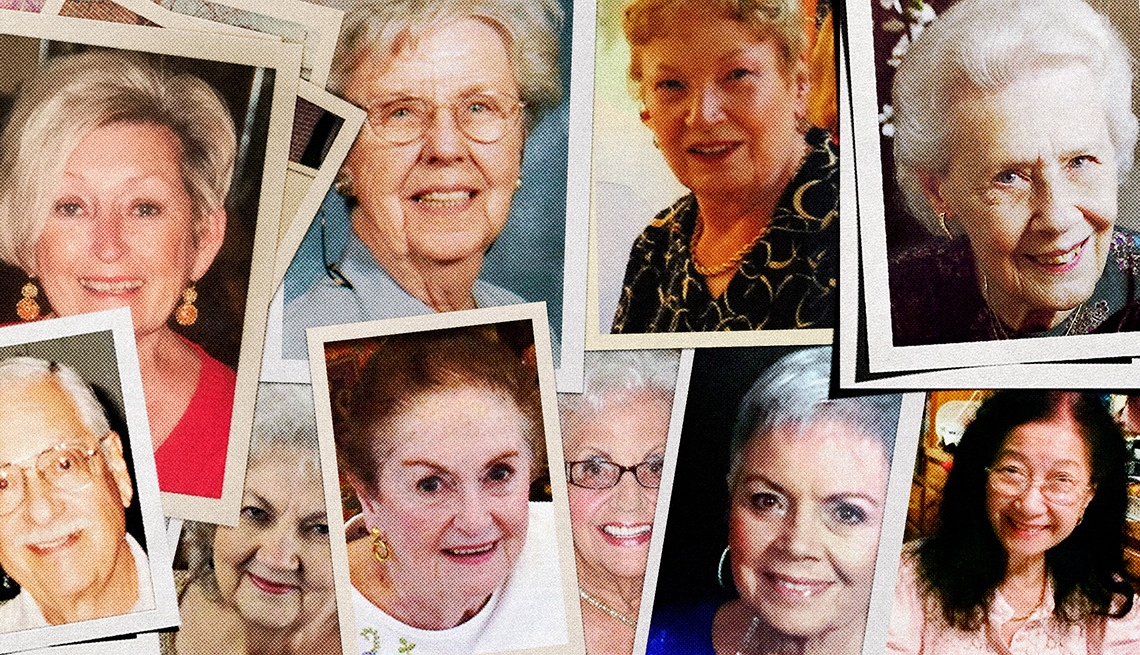
Trying to look or act younger than you are “is silly, very silly.” The more realistic you are, the happier you’ll be, says the Dalai Lama


His Holiness, the 14th Dalai Lama of Tibet, often describes himself as "a simple monk," but his life story has the grand sweep of a 19th-century novel. He's the head of one of the world's great religions and the exiled leader of Tibet. In 1949 the People's Liberation Army of China invaded his remote country. Ten years later, after trying unsuccessfully to negotiate with the Chinese, the Dalai Lama and 80,000 Tibetans traveled over the Himalayas to India, establishing the Tibetan government in exile in the town of Dharamsala. In the years since, the Dalai Lama—now 70—has developed a strong following in the West. His thoughtful advocacy of nonviolence won him the 1989 Nobel Peace Prize. We recently interviewed the Dalai Lama while he was in New York City to meet with the publisher of his new book, The Universe in a Single Atom: The Convergence of Science and Spirituality (Morgan Road Books, 2005).

AARP: Lifestyle Information for People 50 and Over
The entertaining and informative content on AARPmagazine.org is just one of the many benefits of AARP membership—only $12.50 a year. Join or renew online today!

Q: You've called yourself a "semiretired Dalai Lama." When people in America retire, they often take up games like golf. What does a semiretired Dalai Lama do?
A: In a way I play golf in my interior life. For four hours every morning I do meditation. The meditation I practice is not just to sit there in thoughtlessness. I analyze. It's like brainstorming sessions. So within the brain you see a kind of competition taking place between the various poles of emotions. [He laughs.] In a sense this is more fun than golf.

Q: Who wins the competition?
A: Sometimes negative emotions win. Sometimes positive emotions win.

Q: When you have negative emotions, what are they?
A: Anger. Jealousy. And some feelings of hopelessness. Anger always lowers you and is always harmful. Jealousy, too. If some bad things come and remain forever, there is a certain reason to feel hopelessness. But this doesn't happen. Things are always moving, always changing. If we envision that, there is no reason to feel hopeless.

Q: You're 70. How do you feel about getting older?
A: I think people need to be more realistic about age. Sometimes there is too much emphasis on appearance and the artificial. I think this is not only true in the West but in Japanese society.

Q: Are Japanese gentlemen seeking younger wives, as some older men in the West do?
A: [He laughs.] They are dyeing their hair, for example, and trying to look much younger than they are. It's silly. Very silly. My belief is that the more realistic you are in your approach to life, the happier you'll be.

Q: In 1996 you said the 21st century might be an era when peace prevails. Since then we've had 9/11, wars in Afghanistan and Iraq, ethnic cleansing in Sudan. This seems already like a violent century.
A: I think Americans understand only things that touch you in your own lands. For a long time you felt safe. During the cold war, I remember standing on the border between East and West Germany, and there was real fear because they were under threat of nuclear warfare. For Americans, I don't think there was this feeling of fear, really. Then came September 11 and you got a big shock. Since then, terrorism is fresh in your mind. And, therefore, you feel the world has become "bad."

Q: Isn't it?
A: I see a lot of concrete good news. For instance, India-Pakistan relations have improved. About two years ago there was a real danger of war between these two important nations. Both have nuclear weapons. So if a war did take place, it would have been serious.

Q: What about the war in Iraq?
A: Very sad. Every day innocent people suffer. Still, it's too early to say whether that action was right or wrong. If the current violence comes to an end and gives rise to civil society there, that can be seen as a positive outcome.

Before the war broke out, millions of people from Europe, Australia, in the Americas expressed their opposition to the violence. And I was really inspired by their movement for peace.

Q: Did you try to use your authority as a Nobel Peace Prize winner to stop the war?
A: In the period immediately before the violence, there were people who felt that some of us [Nobel Prize winners] should go to Saddam Hussein, talk to him frankly, and warn him of the consequences. That did not happen. I still feel sad it did not. I've participated on many occasions, expressing feelings for peace. But when a real crisis happens, nobody comes forward!

My feeling on this was so strong that later I proposed to some friends an idea. In the future, should some sort of crisis explode, Nobel laureates and individuals who have respect should take a more active role for peace.

Q: So you'd create a "Team Nobel" to nip potential wars in the bud?
A: Yes. There's nothing to lose, even if we fail. Government representatives, they have something to lose. If something fails, they feel embarrassed and there's criticism. With this, if something is achieved, very good. If not, all right, we've done our best.

Q: Your new book is about your long-standing interest in science. Do you believe that there's a conflict between science and religion?
A: Science is a quest for understanding nature's reality. Religion emphasizes the ethical dimension. So these are two different fields. We need both. We need science, and we need religion.

Within the different religions there are a lot of differences. And I believe they are better left as differences. The theistic religious traditions say, "Here is God, the Creator." Nontheistic traditions say, "There's not necessarily that kind of central authority." That's a big difference. There's no use arguing. Each person, each tradition, finds their own concept is more suitable, meaningful.

Q: In American society death is sanitized and hidden from sight. Is this healthy?
A: No. This attitude turns death into some kind of taboo. Sooner or later, death will come. Where there is a beginning, there is an end. This is reality. Sooner or later, I will die.

Q: Have you accepted that?
A: Of course.

Q: All of Buddhism is practice for death, is that correct?
A: It's not just Buddhism. The essence of Christianity involves something similar.

Q: But Buddhists believe in reincarnation. Does that help a person accept the inevitable?
A: For some people, the idea of reincarnation may be comforting. For others, the idea of a long rest in a coffin, a kind of respite, may be comforting: to await the final judgment, where God will judge you, will save you. That's simpler and very comforting.

Q: So you are saying, "Whatever works for you, that's good"?
A: That's what I believe.

Claudia Dreifus interviewed Ben Kingsley for AARP The Magazine in 2004.