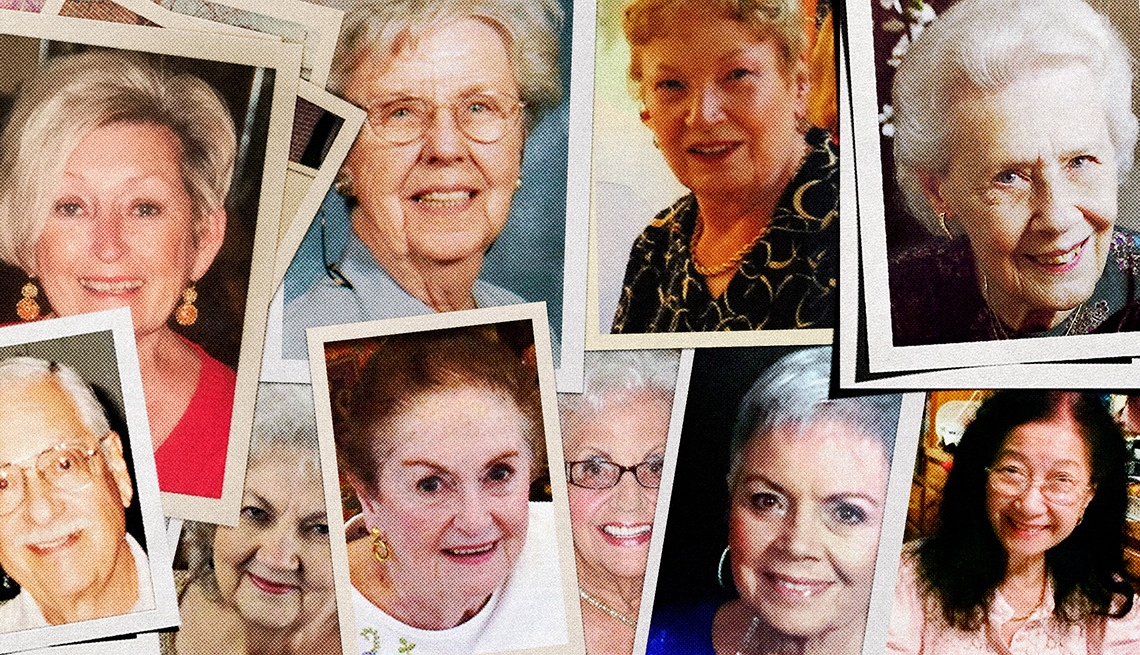
Illustrations by Steve Brodner
|
Wake-up Call
By Peter Keating, September & October 2004
Okay, maybe the Boomer Generation didn’t change the world the way we once thought it would. But as our exclusive survey reveals, this sleeping giant is now rousing itself to rock American politics like never before
|
When they first came of age, it appeared certain that baby boomers were
destined to change American politics forever. The long-haired teens who took to
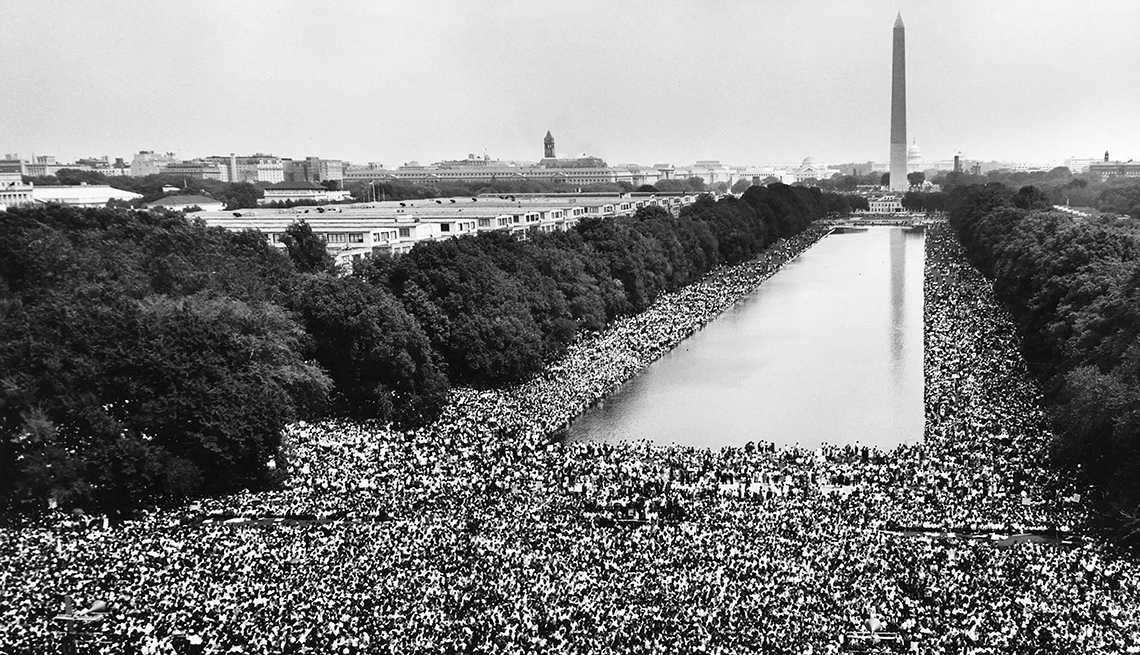
the streets to fight for civil rights and to protest the Vietnam War also won
the right for 18-year-olds to vote starting in 1972. Many political veterans at
the time predicted seismic upheavals in the years to follow, as the kids
matured into activist adults.
As things turned out, boomers have transformed our culture and our economy,
influencing everything from the beverages we drink to the television shows we
watch to the medical procedures we undergo, but not so much our politics. Their
elders, whom we revere as The Greatest Generation for their grit and heroism
during the Great Depression and World War II, have been steadfastly engaged in
setting the terms of public discourse and purpose. Meanwhile, materialism, an
entrepreneurial bent—and a longstanding distrust of big
government—have led the boomers away from mass action.
Until now.
Born between 1946 and 1964, boomers are inexorably advancing in years,
swelling the ranks of older Americans. In 2000, people 65 and older made up
12.4 percent of the nation. By 2030, they will surge to 20 percent. As they
assume the role of our country's elders, boomers will mobilize to protect
their interests, and their sheer numbers will allow them to exert an even more
powerful influence upon American politics than the GI Generation does today.
The boomer earthquake, in other words, is finally ready to rumble. Says
pollster Terry Madonna, who heads the Center for Politics and Public Affairs at
Franklin & Marshall College in Lancaster, Pennsylvania: "Politically,
boomers are becoming the new behemoth."
But what does this powerhouse generation want and expect from government?
How different are its ambitions, beliefs, and allegiances from the generations
exiting the scene and surrendering political power?
This past January, as the 2004 election season had just gotten underway,
AARP and RoperASW conducted a survey of 1,804 Americans, split evenly between
members of the GI Generation (ages 70 and older), the Silent Generation (ages
58 to 69), and the Baby Boomer Generation (ages 40 to 57). The landmark survey
paints a striking picture of the ways that boomers are breaking with preceding
generations on such bedrock issues as Social Security, Medicare, and
retirement, as well as broader lifestyle and cultural matters. All of which
should serve as a wake-up call to the major political parties and their
candidates. While they busily slice and dice the electorate—Soccer Moms,
NASCAR Dads, Exurbanites, and so forth—the nation's largest
demographic bloc is rousing itself to act. A generation of voters up for grabs,
boomers, for better or worse, are on a course to remake the American political
landscape in the foreseeable future.
The Conflicted Conservative
Let's start with one of the biggest surprises of our survey: the
veterans of Woodstock, free love, and be-ins, boomers are a heck of a lot more
conservative than most people would think. On economic issues, for example, 51
percent describe themselves as conservative. Actually, this might have been
anticipated, since it is a political axiom that voters become more conservative
as they grow older. Indeed, 59 percent of those 70 and older describe
themselves as "very" or "moderately" conservative on
economic issues, as do 51 percent of the Silent Generation members.
On the flip side, a mere 15 percent of GIs, 16 percent of Silents, and,
strikingly, only 20 percent of boomers call themselves "very" or
"moderately" liberal on the same economic issues. And when you look
at certain noneconomic issues, conservative views continue to hold sway across
all three age groups surveyed, with a strong majority favoring the death
penalty, school prayer, and "greatly increased military defense
capabilities for the United States."
Yet boomers, generally comfortable with alternative lifestyles and
diversity, are often socially quite liberal. Fifty-nine percent cite the Civil
Rights Movement as a major influence on their views on government and politics,
and 51 percent name the Women's Rights Movement. Let's look at some of
the passionately held opinions of this age group:
- They support abortion rights by a wide margin, 57 percent to 38 percent.
(The GI Generation opposes abortion rights, 49 percent to 43 percent.)
- Seventy-two percent believe the federal government has a definite
responsibility to protect the environment.
- Distrustful of big business, 63 percent of boomers believe that the federal
government has a definite responsibility to protect consumer privacy.
- Seventy-two percent of boomers believe the government should bear the
burden of educating young people. (By contrast, 65 percent of Silents and just
60 percent of GIs feel the same way.)
- Fifty-nine percent of boomers believe the federal government has a definite
responsibility to provide health care to all citizens. (Just 48 percent of the
GI Generation agree.)
My Way
How do you explain the almost schizophrenic quality of the boomer psyche?
The key, says CNN political analyst William Schneider, is that boomers do not
share their parents' generation's trust in government: "Their
parents' experience was that the federal government saved the country from
depression and the world from fascism. Boomers experienced a catastrophic
foreign war in Vietnam, four failed presidencies, and Watergate. And many of
them entered the labor market during the terrible economy of the '70s. To
the extent that they have an ideology, it's vaguely libertarian."
But unlike the GIs and Silents, who asked what they could do for their
country, boomers are finding more and more things that their country should do
for them, without any reciprocation. Our poll shows that boomers are less
likely than members of the GI Generation to believe that it is very important
to serve in the military, pay taxes, or pay attention to political issues.
57% of the Boomer Generation support abortion rights. Only 43% of the GI Generation support abortion rights.
These findings sketch the Boomer Generation's liberation from the
notions of duty that bound the GI and Silent generations—and a
jettisoning of the concept of collective action. In what might best be
described as the privatization of purpose, boomers—who grew up in an age
of unparalleled affluence, opportunity for education, and social mobility, all
of which fostered individual path-seeking—prefer to do it their way.
Where the issues are sure to hit the fan is over the matter of entitlements.
"The political center of gravity will shift as baby boomers become
increasingly self-interested in maintaining their benefits," says Henry
Aaron, senior fellow in economic studies at the Brookings Institution. And
maintaining these benefits may prove increasingly difficult as 77 million
boomers become old enough to collect Social Security and there are fewer
younger workers paying into the fund. According to the Social Security
Trustees' projections, payroll revenues will be sufficient to pay all
benefits until 2018. Beginning in 2018, however, payroll revenues will need to
be supplemented by interest on the bonds the trusts hold. If the projections
hold, 100 percent of benefits will be paid until 2042, when, unless Congress
has taken some action, incoming revenues would only cover 70 percent of
currently promised benefits.
Solving the inevitable entitlements squeeze won't be easy, given that
nobody likes tax increases. But boomers don't want their benefits cut and
they're increasingly unwilling to see them untethered from federal
guarantees. By a slim majority, boomers oppose privatizing Social Security and
Medicare. As they get older, that majority will likely become more pronounced.
"Many people don't pay attention to Medicare or Social Security until
they get closer to receiving benefits," says John Rother, director of
policy and strategy for AARP. "Then their attitudes begin to change, and
they become more supportive of the programs." (Americans 70 and older are
overwhelmingly opposed to privatization of Social Security, 67 percent to 26
percent, and of Medicare, 62 percent to 29 percent.)
But Social Security and Medicare are only two examples of where boomers will
upend the balance between obligations and entitlements. At the very moment in
history when America is losing members of the generation that most fully
understands sacrifice for the common good, boomers are taking the stage to
demand their due. The potential downside of a maturing baby boom is clear: as
boomers replace GIs as the dominant electoral demographic, the politics of
selfishness could triumph.
The New Splinter Politics
One might predict that boomers' tolerance and respect for individual
pursuits will lead to friction-free politics in the not-too-distant future. One
might be wrong. Instead, with the GI Generation having lost its influence and
the Silents, well, silent, some issues upon which there previously had been an
essentially conservative consensus may become more divisive.
56% of boomers believe that the country needs a strong third party. 37% of GIs agree.
That's because boomer-style social liberalism is defined by
fragmentation—politically, geographically, and even socially. Paralleling
the rise of niche-interest groups in the culture at large—consider how
three TV networks once decided what your viewing choices were and now there are
hundreds of special-interest channels—Americans increasingly coalesce
into clusters of citizens who think alike on subjects that matter most to
them.
More splinter groups mean more groups, period. And more to argue about.
Attitudes about and conflicts over gay marriage are a case in point. Boomers
are more than twice as likely as GIs to support gay marriage (26 percent versus
11 percent). We're already looking at an increasing firestorm over an issue
that a generation ago was a nonissue simply because it was unmentionable. In
the future, divisiveness over gay marriage and gay rights in general could
become even more heated as younger, even more accepting generations come of
age.
This accelerating fragmentation into interest groups is already leading
voters to focus increasingly more on issues than personalities. Boomers in our
poll are almost evenly split on whether a candidate's personal qualities
matter more to them than his or her positions on key issues, while GIs say
personal qualities matter most, by a sizable margin of 62 percent to 25
percent. Simultaneously, new voting blocs and rivalries are evolving, sometimes
along economic or gender lines. For example, boomers have gone much further
than any previous generation in embracing equality of employment for women. But
the rise of the career woman, along with an increasingly fluid definition of
family roles, has created new cleavages. Married men supported George W. Bush
over Al Gore by a margin of 58 percent to 38 percent in 2000, while unmarried
women backed Gore over Bush by 63 percent to 32 percent; the gap between the
two was the largest ever recorded.
In the years ahead, then, new issues will bubble to the top of the political
cauldron. We can expect vigorous arguments over subjects that didn't even
exist a generation or two ago, such as stem cell research—which 55
percent of boomers support, compared with just 44 percent of GIs. And we can
expect boomer preoccupations to dominate public debate.
Softening the Blow
Fortunately, experts point to two trends that could ease the economic
effects of the boomer ascendancy. One is immigration: people who enter the
United States are generally young adults who work, pay taxes that support older
Americans, and have children who will become taxpaying workers. And
boomers' enthusiasm for diversity may enable the nation to adjust more
easily in the coming decades to an inflow of new residents. Rather than respond
to increasing immigration by railing against foreigners, boomers will sit with
their grandkids to watch Dora the Explorer, the bilingual cartoon character who
is now one of the most popular TV personalities in the United States among two-
to five-year-olds. "If we continue to have immigrants, there will be a net
payoff; we will not age that rapidly, and fine-tuning the [Social Security]
system will be good enough," says Peter Lindert, professor of economics at
the University of California at Davis and author of the influential book
Growing Public: Social Spending and Economic Growth Since the Eighteenth
Century.
59% of boomers say the government should fund health care. But only 32% trust the government to do what is right all or most of the time.
The other mitigating factor is the innovative spirit of boomers themselves.
They are, to generalize just a bit, a generation that wants it all: meaningful
work, pleasurable play, and happy families, all at the same time and all on
their own terms. And they will rewrite the rules to make that happen. Landon
Jones, the former managing editor of Money and People magazines who popularized
the term "baby boomer," said it best in an interview last year:
"They will change whatever structure they are in. Whatever they enter,
they will explode it."
Indeed, boomers have remade each life stage they have passed through.
Business, as well as government, has had to pay attention to the choices they
made. Boomer children created the market for classic toys first produced in the
'50s and early '60s, such as Barbie dolls and Hula Hoops. Boomer
teenagers were the first to consume music, clothes, and cosmetics made just for
them. And, beginning in the 1970s, boomer women entered the workplace and
transformed its basic rules within a generation.
Now boomers stand poised to rewrite the rules of aging and retirement.
Wealthier and healthier than their predecessors, they will want to remain more
active. More attached to their own work as a means toward individual
fulfillment than GIs and Silents were, many will want to keep working; less
dutiful to institutions, they will reject the notion that a caretaker state
should fully subsidize their lives.
"Longevity allows you to reinvent yourself," says Ken Dychtwald, a
gerontologist who heads Age Wave, a consulting firm in San Francisco. "We
are going to see people go back to school in their 70s, start a business in
their 80s, take up a language at 90. Boomers will find a way to make old age
cool. And they will demand changes in the way work is structured, so they can
work four days a week or on a project basis or take a year off—so they
can work and play in a new balance on their terms." If they successfully
redefine retirement and remain in the workplace longer than their predecessors
did, boomers will require fewer subsidies from government, keep paying taxes,
and be more socially engaged than previous eldest generations. All of which
would help soften the coming clashes over entitlements and social issues.
Can't Get No Satisfaction
In what could have ramifications across the board politically, our survey
found significant pessimism about the overall direction the country is taking.
Fifty-three percent of boomers say things "have pretty seriously gotten
off on the wrong track." Fifty-six percent of Silents and GIs agree with
that assessment.
Some of this dissatisfaction rubs off on the two major parties. Boomers,
according to our polls, are more likely than GIs or Silents to have switched
parties because their own political views have changed, and a substantial 56
percent of them believe the country needs a strong third party. Such results
would appear to indicate an increasing boomer unease with the inability of the
political parties to craft forward-thinking platforms that address their
needs.
But the major parties don't appear to be much interested in embracing
new ideas and new coalitions, preferring instead to engage in escalating levels
of partisan ruthlessness. "Since the advent of Newt Gingrich, ideological
divisions have played a bigger role in politics," says AARP's John
Rother. The result is an unhealthy, growing disconnect between the American
people and their elected representatives—and missed opportunities to win
the loyalty of a generation of voters still up for grabs.
On November 2, Americans will choose between two competing visions of our
nation's future. Whoever wins will soon face the demands of a
boomer-dominated electorate that expects more from its government than did
preceding generations. Whether or not the winner succeeds in resolving the
inevitable conflicts created by these demands will depend on whether he can
lead this ambitious generation beyond selfishness toward citizenship.
Peter Keating was a former senior writer for politics at George
magazine. His work has also appeared in Money and Fortune.
|