July 4, 2009


Advertisement


Photography by Lee Snider/CORBIS

Web Exclusive…

No Straight Answers

By Randy B. Hecht, May & June 2004

America’s older gays and lesbians struggle with health care, inheritance, retirement benefits, social services, prejudice, and more


A recent widow at age 55, Joan Albertson* fears she may be forced to sell her home because of various estate taxes and the significant drop in household income.

Joan met Lee* in 1990, and they moved in together three years later. They danced at family members' weddings, moved for one another's work, and, although they never got married, considered themselves spouses.

In fact, they could not be married—they are lesbians.

And so when Lee was diagnosed with terminal lung cancer, she and Joan completed health care proxy documents. Joan recalls accompanying Lee to almost every doctor's appointment over seven years of illness. "Mostly, our experience with her health care providers and hospitals was sensitive and caring," she says. "But getting access to her medical records required extra faxes and signatures. And when my partner was heavily sedated with morphine and could not speak on the phone, one of her doctors refused to discuss her situation with me despite my holding her health proxy.

"In October, my partner died at age 66—at home, as she had requested. Because we could not be married, I was not allowed to sign the death certificate. Massachusetts law requires 'next of kin.' "

Now, Joan fears she may have to sell their home because she lacks the legal and financial protections that would come automatically if she had been married. The house was purchased in both names with rights of survivorship. Joan must pay taxes on Lee's share of the house, which, she says, would not be the case if they had been married. "Her estate is taxed at a higher rate than would be true for married couples. This reduces the amount of money available to her [heirs], which includes her four children, five grandchildren, her church, and other charities," Joan says.

Joan won't get her partner's Social Security benefits and pension, either. The survivor of a married couple would have collected both.

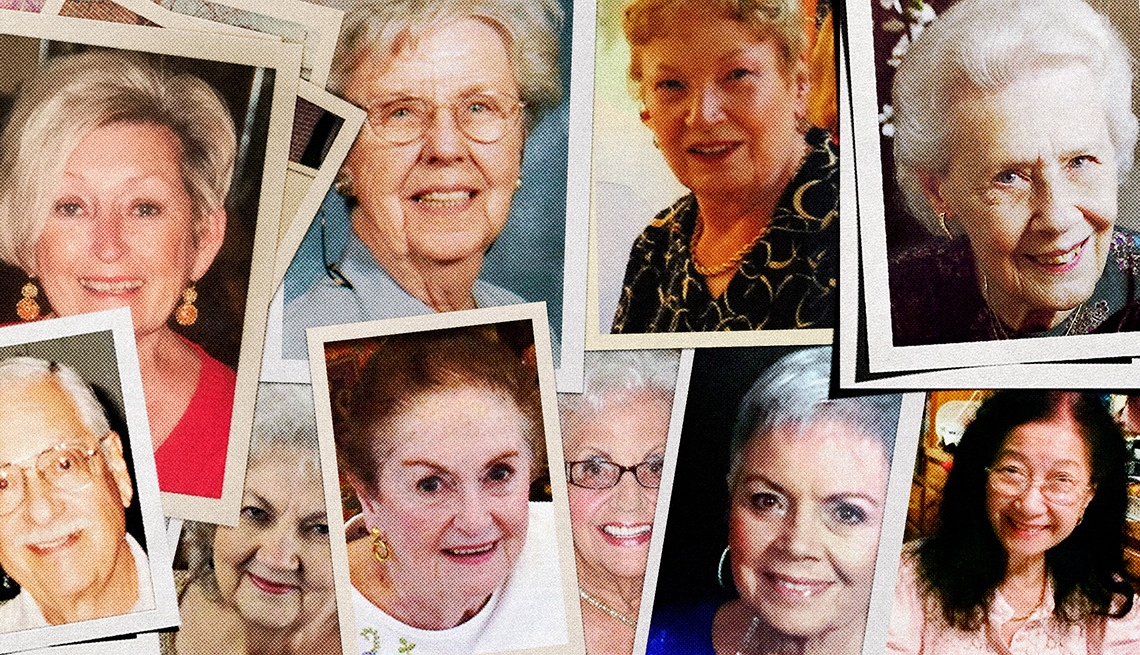
Joan is far from alone. Many older gays and lesbians face a wide range of problems concerning inheritance, retirement benefits, social services, health care, and more. Indeed, more than one in four same-sex couples includes a partner over age 55, according to a recent report by the Human Rights Campaign Foundation, the research arm of the Human Rights Campaign (HRC), the nation's largest lesbian, gay, bisexual, and transgender (LGBT) advocacy organization. (Read the report in PDF format.)

In addition to missing out on Social Security benefits and being charged with an estate tax on a jointly owned home, an older homosexual whose partner dies may also incur taxes exceeding tens of thousands of dollars after inheriting a retirement plan, according to the HRC Foundation report.

HIV/AIDS Among Older Gays and Lesbians
According to the National Institute on Aging, about 75,000 people diagnosed with AIDS in the United States—or 10 percent of the total number—are age 50 or older. Many others may be too embarrassed to get tested for HIV. And doctors may mistake symptoms of HIV for other illnesses or signs of aging, says Terry Kaelber, executive director of the nonprofit Senior Action in a Gay Environment. "It's really important for the provider to know the sexual orientation of their patient, and very often that's hidden if people don't feel safe."

With married couples, "when someone dies, their surviving spouse has the opportunity to roll over the amount into a tax-deferred retirement plan of their own or an IRA or, in some cases . . . accept this benefit in an annuity that is in periodic payments as opposed to taking it in a lump sum," explains David Tseng, executive director of PFLAG (Parents, Families and Friends of Lesbians and Gays), who served as a senior policy advisor in the Clinton Administration, focusing on benefits and retirement policy. "Same-sex couples do not have those alternatives." The surviving beneficiary must withdraw the amounts immediately, Tseng says.

That point resonates with many older Americans of all sexual orientations, says Massachusetts state representative Liz Malia, a lesbian who also serves as a leading voice in the state's legislative and judicial battle over the constitutionality of denying same-sex marital rights. She's talked with many constituents about the issue. "How do we help gays and lesbians who have been together for a long time protect their investments if one dies? People lose their homes because they just can't manage," she says. "A lot of older people really are very understanding of what this is about and are much more tolerant than some younger people, because . . . they identify with them. If you can identify and not compare, it makes it a lot easier to make the jump from what you've been traditionally, culturally used to, to what's fair and reasonable in this world."

'Do Right by Us'

For many older gays and lesbians, the marriage issue is irrelevant. They are 2.5 times more likely than older heterosexuals not to be in a relationship, according to a 1999 study conducted by the nonprofit group Senior Action in a Gay Environment (SAGE) and New York's Brookdale Center on Aging. Two-thirds of older gays and lesbians live alone as they age, and 90 percent are childless. Research has shown that people who age alone are more likely to subsist on a limited income or even live in poverty. Their isolation also puts them at increased risk for depression or other mental health problems, substance abuse, unnecessary hospitalizations, premature residence in nursing homes, and even premature death.

These risks are pronounced among older gays and lesbians because "the vast majority of our community's seniors do not access mainstream services," says Terry Kaelber, executive director of SAGE, founded 25 years ago to address the impact of aging on the gay and lesbian community. "The very services that, when you age alone, become really critical are services that either we don't access or, if we do access, we tend to do it in very proscribed, anonymous ways."

Just getting gay seniors to take a flyer left at a senior center is a challenge, says Bethany Joseph, director of client services at Brooklyn's Park Slope Geriatric Day Center. In partnership with SAGE, the center has a grant to fund gay and lesbian outreach initiatives.

Older gays and lesbians "come from a different generation, in which being closeted was the norm, and you don't want to be the person that stands up and goes over and takes a flyer that has the word gay or lesbian on it for fear of what those repercussions are," Joseph says. "Will the few informal supports that you do have disappear because now you've 'outed' yourself? It's a big risk. Is it going to be worth it?"

In Massachusetts, the LGBT Aging Project is addressing these issues in collaboration with home care agencies and nursing homes by training health care service providers to address the needs of the LGBT community. Director Amy Hunt explains, "It's not like we reject the notion that the gay community needs on some level to care for itself and make its own way, but we also think that it's very important to go into the mainstream environment and say, 'Do right by us.' There are institutions that some members of our community rely on, and we have an obligation to go into those institutions and help them do a better job." The advocacy group also works to raise public awareness and change laws and public policies.

One issue that Hunt's organization addresses is straight people's discomfort with openly gay relationships. At presentations and open discussions at health care facilities, nursing homes, and senior centers, she asks people to "imagine what it would be like if on their way into the senior center that morning, they were asked to take their ring off their finger, and they were asked to answer every question . . . without mentioning a husband or a wife who they have at home, or perhaps who they buried last year and still like to talk about. Could you get through that day? Could you get through that conversation? Can you imagine what that's like? Do you understand that you're asking people to do that when you ask them to keep it to themselves?"

The need to feel comfortable at home, to have a sense of security, has sparked the creation of gay retirement communities across the country. The first, The Palms of Manasota, opened in 1998 in Palmetto, Florida, and now includes 30 homes and 44 villas. Others have sprung up across the country: The Pueblo, a recreational vehicle and mobile home community in Apache Junction, Arizona; The Resort on Carefree Boulevard, a 278-home community in Fort Myers, Florida; and Parkside Male Residential Hotel and Retirement Center, in Akron, Ohio. Plans are underway for similar retirement communities and assisted-living facilities in Boston, New York City, New Mexico, North Carolina, and other locations.

"Gay and lesbian housing in some ways is a misnomer," says Kaelber. "It's housing that is being sponsored by gay and lesbian organizations. No one can discriminate against anyone coming into housing, and that's true with this senior housing, but we want people to know from the outset, 'Look . . . we celebrate the gay and lesbian community here. If you want to be a part of that, great.' "

Older Americans' response to all this outreach is generally positive, Hunt notes. Invariably, someone in a discussion group will say, "I have a gay son, and I love him, or I have a gay grandchild, and I want everybody to know that, and I love that grandchild the same as the others," she explains. "So to think that this is a monolithic group of people, that they have no interest in evolving or learning or talking, I think is wrong. I think we underestimate older people in many, many ways."

* Names have been changed.