November 20, 2009


Advertisement


Photograph by Elfie Semotan

Danny Glover: The Fire Within

May & June 2004

A self-described child of the Civil Rights Movement, Glover still fights for the oppressed, only now the whole world is his stage


If you know Danny Glover only from his role as detective Roger Murtaugh in the blockbuster Lethal Weapon series that made him a household name, a conversation with the 58-year-old actor can catch you off-guard. In the flesh he's as amiable as his best-known onscreen character—a big, soft-spoken man with a raspy voice and a winning smile. But behind that grin lies a keen political intelligence and a fervor for fixing what's wrong in the world.

Glover is something of an anomaly in Hollywood—a celebrity who was trying to give something back well before he was famous and rich enough to have a lot to give. Indeed, the San Francisco native became an actor almost by accident, the result of his involvement in community cultural programs as a member of the Black Students Union at San Francisco State College in the late '60s. Following graduation in 1971, Glover enrolled in the American Conservatory Theater's Black Actors Workshop, where he fell under the spell of South African playwright Athol Fugard. It was his 1982 performance on Broadway in Fugard's "Master Harold"...and the Boys that won him national recognition and certified him as an actor to be reckoned with.

Since his 1979 movie debut as a prisoner in Escape from Alcatraz, Glover has appeared in more than 40 feature films, including the critically acclaimed The Color Purple, based on the novel by Pulitzer Prize winner Alice Walker. He has also produced and directed films for television, often with a racial or political theme, including Buffalo Soldiers, about the all-black cavalry units that helped conquer the U.S. West. On the drawing boards is a film on the life of Toussaint L'Ouverture, the former slave who led Haiti to independence in 1801.

Yet it is his activism that continues to define Glover's life and keeps him flying high, literally—the man lives on airplanes. He's board chairman of the TransAfrica Forum, a Washington, D.C.-based organization that lobbies U.S. policymakers on behalf of African and Caribbean countries. He's a Goodwill Ambassador for the United Nations Development Programme, which promotes economic development in poor countries. He also serves on the board of The Algebra Project, a math empowerment program developed by civil rights veteran Robert Moses.

As it happens, he arrived in New York for his interview with AARP The Magazine fresh from a visit to Kenya, where he lent support to struggling coffee growers. And October 14 to 16, he will be a featured speaker at the AARP Life@50+ Member Event at the Sands Expo Center in Las Vegas, Nevada. There, says Glover, his message will center on how to keep meaning in our lives as we age: "Staying active means more than just playing golf. I want people to remain politically active as we get older. Stay engaged and provide wisdom for the next generation."


Q. You never stop. How long have you been an activist?

A. All of my life. I'm a child of the Civil Rights Movement. I was seven years old when the U.S. Supreme Court made the decision in Brown v. Board of Education. From that point on, I followed the movement. I also followed it through my parents. They were postal employees, were very involved in restructuring their union after it was desegregated in 1948. It was a kind of empowerment that my parents embraced; the Civil Rights Movement was tangential to their own struggle. I was always privy to the discussions going on. Those were the things that shaped me.

Q. Was there also something about growing up and going to college in San Francisco that drew you into activism?

In San Francisco you had the Beat Generation. An outgrowth of that, to some large degree, was the whole radicalization of Haight-Ashbury. Then there was the Black Panther Party in Oakland. A number of us in the Black Students Union (BSU) at San Francisco State worked in the Panthers' free-breakfast-for-children program. We also helped them organize their newspaper. Although we weren't in the party, we were all involved.

I lived in a political commune for a year. We embraced a lot of struggles globally. The anti-Vietnam War movement positioned us. There were liberation struggles going on in South Africa, the Portuguese colonies, and Zimbabwe. All of those things converged into a very strong activism.

Q. What moved you from politics to the stage?

I don't think I would have been an actor had it not been for my embracing Athol Fugard's writing. One of the things he allowed me to do was learn the intricacy and beauty and the transforming power of dialogue. At the same time, he gave me a basis for learning the craft of acting.

Q. Had you always had a secret desire to be an actor?

I never thought about being an actor. In 1967, the students at San Francisco State invited the poet Amiri Baraka to the campus for a semester. He attracted other influential black writers such as Sonia Sanchez, Ed Bullins, Eldridge Cleaver. What emerged was something we called the community communications program—dance, newsletters, poetry, drama. That's how I got involved; I got involved in a little play. As the BSU went through restructuring, I was named the minister of culture. At 20 or 21 years old, I wasn't even imaginative enough to know what that meant. But that's how I first got involved in acting.

Q. Years later, you are an established star who can make blockbuster movies on the one hand and films that could be described as high-minded on the other. How do you achieve that balance?

When you've moved past a point where you're just scrambling for jobs, you think about the things that you want to do. And the things that you want to do are governed by what you've seen, what you choose to embrace. Some of these things I saw in foreign films—African films, Cuban films—long before I decided to really go on this course as an actor. I started to think about what values I saw in those films that I wanted to bring to my projects.

Share Your Civil Rights Story
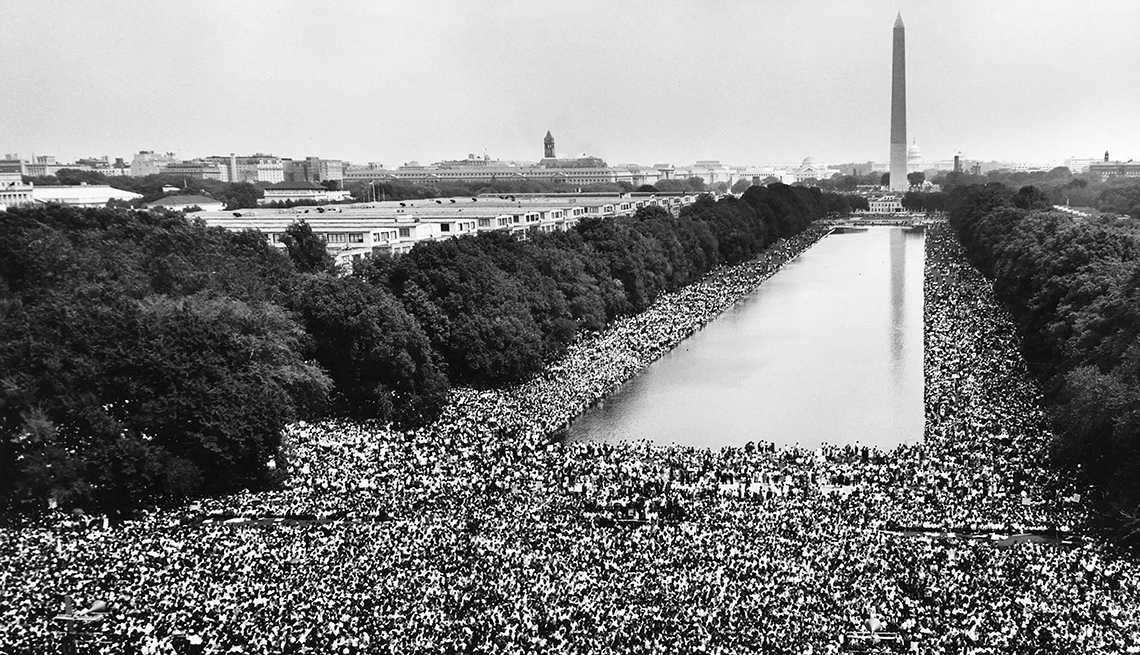
Read personal stories of the struggle for civil rights or share your own at the Voices of Civil Rights website.

Q. Aside from acting, what keeps you busiest these days?

One of my primary involvements has been the TransAfrica Forum. I'm chairman of the board. It began 23 years ago in response to the apartheid movement. One of its most notable victories was the creation of sanctions against South Africa in 1986.

It now addresses such issues as the global HIV/AIDS pandemic, debt relief, and reparations.

Q. Aside from getting them attention, what does your being a celebrity bring to these issues?

I'm not so vain as to believe that my involvement changes anything whatsoever. My best hope is to bring a tone through my engagement, drawing attention to organizations that are often left out of the mainstream media. I hope people become engaged in the dialogue and embrace these issues in such a way that it doesn't generate hostility and fear.

For example, if I want to talk about the death penalty, I approach it from a broad spectrum: its application to people of color; as a moral issue; from the standpoint of the possibility of innocence—all of the ways people can find some reason to finally ask, "Why is the state killing its own citizens?"

Q. A survey on race relations commissioned by AARP and the Leadership Conference on Civil Rights and published in this issue of AARP The Magazine reveals increased tolerance in America. Does this indicate to you that progress has been made in the last 50 years?

Harry Belafonte said to me that in one of his last conversations with Dr. Martin Luther King Jr., Dr. King wondered whether he was integrating his people into a burning house. So Harry asked him, "What should we do?" Dr. King answered, "We become firemen."

Have we become firemen in this process of integration? Does the mere fact we have more black elected officials, more black mayors, and more black doctors constitute some degree of success? Does the mere presence of us on Wall Street alter the configuration of power, the configuration of policy?

As we look at our inner cities, we could say that despite all these positions, the policies toward our inner cities, our schools, and our children have been a failure.

Q. So, you maintain that progress has not been made?

What has this progress meant for the majority of black people? Since 1957, black people have experienced double-digit unemployment—in good times and bad times. Look at the population of African Americans in prison. They represent more than half the population of prisoners in the country, 55 percent of those on death row.

If African Americans are going to be firemen for the whole house, then why haven't we been more active in fighting for universal health care? Why haven't we been more active on the moral issues? Maybe it's been the level of leadership or the undermining of local leadership.

Q. Isn't the presence of people like Colin Powell or Condoleezza Rice on the world stage evidence of gains by blacks?

What is Powell's personal relationship to us? Is he a person who really is a man of peace? Or is he just a part of the fabric, a tool that happens to be black? He has all the credentials, just as Condoleeza Rice has the credentials. What they've done is learned the rhetoric very well and they just happen to be black.

Q. You say the power structure has not changed. Still, the AARP-LCCR survey suggests at least a change at the personal level in the attitudes of people.

In the abstract, yes. But what does it really mean? Does it mean we gain an understanding of the emotional pain, the historical pain of others? Does it mean we have compassion? Do we add a discussion of what you're afraid of, what I'm afraid of?

Every day of my life I walk with the idea that I am black, no matter how successful I am. And our success is tempered by that; you're successful in this way given the fact you are black, and most blacks don't get to that point.

Q. You paint a disappointing picture. Is there anything happening that makes you optimistic?

I try to find hope in struggle and resistance in small places as much as I can. The progressive movement against the war of occupation in Iraq is a reason for hope, as is resistance to free trade agreements in Latin America. Those are moments that we have to celebrate: that people still find the resolve and energy to resist.