November 7, 2009


Advertisement


Photo by Joshua Kessler

Being 80: Old Age Is Not for Sissies

By Doris Lessing, May & June 2006


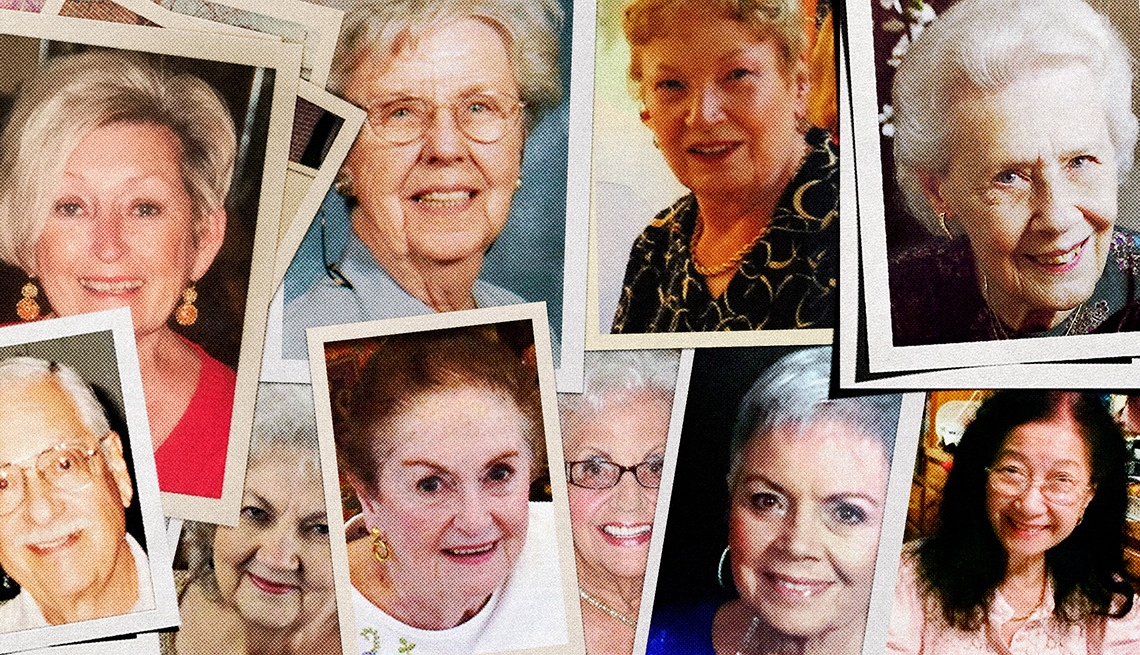
When I was young, immeasurably and unimaginably far ahead was a landscape of aged people with white heads and blotchy hands tottering on walking sticks—walkers had not yet been invented. How I did fear this place, old age, and particularly the old women, each one of whom I knew (theoretically) to have been once like me, young and pretty.

"Old sheep," I would tell myself, at the sight of some probably delightful old lady, "horrible old silly sheep." I was determined never to be like that. "I will not, I simply will not," I muttered to myself as part of a private litany, for I was always swearing privately that I would not do this or that, get old, ever be ill, lose energy—the psychological equivalent of Botox and the surgeon's knife and, in the long run, probably as effective.

But journeying on, year by year, in the company of my peers, it was soon noticeable that this one, aged 30, was already becoming staid and middle-aged, and another, 40, was claiming to be not as young as she once was. In other words, it was evident that people are not all the same.

Many of the wise have remarked that for a healthy old age it is necessary to choose one's parents well. They were talking about heredity, about genes, long before we prattled about genes, as once people invoked Fate, or Destiny.

But perhaps one's genes are not necessarily the last word? On the most elementary level, when a doctor asks, "What did your father die of?" I have to say, "The First World War, though not on the battlefield; it took time." "And what did your mother die of?" And the reply is the same, though in her case the process was not so obvious. Faced with a casualty list let's say from Iraq, "genes" are irrelevant indeed. Old people live with ghosts from half-forgotten wars. Catching sight in Memory Lane of some young soldier, I find myself calling, "Tom, Dick, Harry, you should have lived a long life, like me. We could sit together now and talk over old times."

By the time I had reached my 60s I was observing that some people became decrepit while others of the same age flourished, and that an old woman could be the sister of someone in her prime, measuring in our modern way, "70 is the new 50," "80 is the new 60"—and so forth. I happened to become friendly with two old women in their 80s, and one was lively and youthful and another was old. Genes? Not in this case: it is possible simply to decide to get old. We may see it going on. Someone takes to her bed or will not leave the house.

One old woman, let us call her Mary, decided she was lame and would never get out of bed or her easy chair. She was looked after by caregivers of all kinds. The woman downstairs, ten years older, was off to church, socials, luncheon clubs, and she would exhort her delinquent friend, "Just pull yourself together, that's all. Get out of that chair! Be like me!" But no, old age had already been decided on. The fact that Mary had been a waitress for 40 years might have decided her: it was time other people waited on her.

Is there a gene for being determined to get old before your time?

In '86 I was in Pakistan visiting the refugees from the Russian invasion of Afghanistan, and more than once I was with old women, but their real ages were 20 or more years younger than mine. Toothless mouths, wrinkles, white hair, a general decrepitude. But in that culture women are expected to be old when women in what we call the West are still young. I saw this scene, in Peshawar. A young woman, Afghan, beautiful, sat smiling a welcome when a little boy rushed up to her, pulled down her blouse, and took a quick swig from her already old breasts, which had clearly never known a bra. She clicked her tongue in annoyance, but did not repel the child, her lord and master, if only two years old. She was pregnant. Near her a little girl taught obedience and humility by her situation as a girl watched everything and smiled. An obstreperous six- or seven-year-old boy was bossing his mother around. There was little doubt the girl would soon be like her mother, whom I had taken to be her grandmother—gap-mouthed, bent, and frail. I don't think genes had much to do with the surprises in that scene.

If I am not dwelling on the innumerable ignominies that go with being really old, like me, which creep up on you, then that is because I feel we dwell on them too much already. As we become 70, 80, 90, we people who have been commenting about our lives tell the world what it is like to go gray, lose our figures, our faces, our energy, lose six inches in height.

"Old age is no place for sissies," said Bette Davis. You can say that again. (I am saying it again.) The sheer craftiness, tact, ingenuity, needed to deal with the continual assaults on one's pride and independence and dignity are perhaps best not dwelt on, if for no other reason than they might dismay young citizens who will of course when their time comes deal with it all just as well.

I amuse myself making definitions of old age: "When you wake up in the morning and are delighted that you don't have to go out that evening." "When every week you hear of some nasty disease some dear friend has succumbed to, and you have never even heard of it." "When you leaf through your address book and it is like strolling through a cemetery." There will be different reactions to that last one, and this brings me to something I think is not considered enough—temperament, the nature of an individual. For instance, there are people for whom dying is like a kind of personal affront; and their beliefs have nothing to do with it. Some, and they may be religious, believing in hell, purgatory, limbo, frisk happily toward death with a smile.

Some say they believe in happy-ever-afters, but they are frightened and apprehensive. It is their temperaments that decide. Perhaps one day they (the scientists) will be able to whisk out the gene for gloom and fear?

A gene for dotty inconsequence?

An old friend, 93, told that she had cancer and must die soon, was furious. "Why me?" she demanded. "But Sarah, you are 93." "But I am a good person," she protested, and insisting that she found it all very unfair, she proceeded, indignant, toward her death.

Doris Lessing is an award-winning author; her latest book is The Story of General Dann and Mara's Daughter, Griot and the Snow Dog (HarperCollins, 2006).