July 4, 2009


Advertisement


Photo by Stockbyte Silver/Stockbyte/Getty Images

7 Reasons to Get Off the Couch Already!

By Gabrielle deGroot Redford, July & August 2006

Pump up your memory, your immunity, and your libido, all while adding years to your life


You probably know that exercise is good for you. You might even know that regular physical activity can reduce your risk of developing heart disease, diabetes, Alzheimer's, and some forms of cancer. In the past few years, though, researchers have discovered that people who exercise regularly reap even greater health benefits. For instance, did you know that exercise can actually decrease pain in people with arthritis? Or that women who exercise experience far fewer hot flashes than those who don't? (Sweat now so you don't sweat later is the idea.)

"If you could put exercise in a pill, you'd be able to treat so many chronic conditions and diseases," says Roger Fielding, Ph.D., director of the nutrition and exercise physiology lab at Tufts University.

Basically, physical activity can be broken into two types: aerobic exercise and strength training. Aerobic exercise stimulates the cardiovascular system, boosting blood flow to the heart and the rest of the body. Researchers believe many of the health benefits attributed to aerobic exercise stem from this increased blood flow.

The second type of exercise, and one that becomes much more important as we get older, is strength training. Numerous studies have shown that strength training can reduce and even reverse some of the body's natural age-related declines in bone and muscle mass, even in people who begin a strength-training program late in life.

Ideally, you should shoot for 30 minutes of aerobic exercise most days of the week and 20 minutes of strength training two or three times a week. But you could do less and still benefit. "It's important to realize that even small changes people make in their lives can have important health outcomes," Fielding says. "We don't want people to look at the guidelines and say, 'I can't do that so I'm not even going to try.' The message should be to try to do some physical activity every day—gardening, walking to get the mail, walking around the grocery store. It all counts."

What also counts are the tremendous benefits from making just a few simple changes in your daily routine. Here, then, are seven life-enhancing benefits of regular exercise.

1. Live longer
A landmark study of more than 17,000 middle-age Harvard graduates found that those who exercised on a regular basis reduced their risk of dying prematurely by 25 percent. Much of that gain can be attributed to the fact that people who exercise have a lower risk of heart attack and stroke. But according to a recent study of people 50 and over, those who exercise live between 1.3 and 3.7 years longer than those who are sedentary, independent of the cardiovascular-risk factor. The more vigorously you exercise, the longer you'll live. "Our bodies should last us 120 years," says Kenneth Cooper, M.D., executive director of the Cooper Institute of Aerobic Research in Dallas. "We don't live that long not because of the way we're made but because we don't take care of ourselves."

2. Remember where the car keys are
As we age, our short-term memory of details in the immediate past—what we ate for breakfast, where we put our glasses—decreases. A recent study, however, found that mice who exercised regularly not only learned a new task more quickly but also retained what they learned better and actually developed new brain cells in the memory section of the brain. The most exciting part of the study, though, was that the mice were about the equivalent of 70 in human years, and they developed increased memory skills after exercising for only one month.

It's important to realize that even small changes people make in their lives can have important health outcomes.

3. Heal faster
It's no secret that as we get older, it takes longer for our bodies to heal. But now researchers have found that regular exercise can dramatically speed the healing process. Scientists at Ohio State University divided subjects ages 55 to 77 into two groups—one group attended supervised exercise sessions three days a week and the other didn't. At the end of one month, researchers inflicted wounds on the arms of both groups of volunteers, then monitored the wounds to see how quickly they healed. The result? The exercisers' wounds healed about 25 percent more quickly (29 days versus 39 days in the nonexercising group).

4. Increase sexual function
By age 50 one-third of American men suffer from some form of impotence. Newer drugs such as Viagra help treat erectile dysfunction (ED)—notably by increasing blood flow to the penis—yet none of these medications works quite as well in the long run as regular exercise. Men who participated in frequent vigorous exercise, the equivalent of running three hours a week or playing singles tennis for five hours a week, were almost a third less likely to suffer from ED, according to a study published in the Annals of Internal Medicine. You don't have to exercise that hard to maintain a healthy sex life, though. Another study of men between the ages of 40 and 70 found that those who burned at least 200 calories a day exercising—the equivalent of a brisk two-mile walk—were less likely to suffer from impotence.

Membership – Join, renew, or learn about exclusive AARP member benefits.

5. Have fewer hot flashes
About 75 percent of women in the United States experience hot flashes during menopause, and some 25 percent still get them ten or more years later. In the past, doctors treated these women with hormone replacement therapy (HRT), which provides supplemental estrogen and progesterone and is highly effective in reducing hot flashes as well as other symptoms of menopause. But in 2002, millions of women discontinued taking HRT after becoming concerned about side effects. Exercise may be a better alternative anyway. In 1998 a Swedish study of almost 800 women ages 55 and 56 found that those who exercised at least two hours a week were much less likely than their nonexercising counterparts to experience severe hot flashes. Researchers suspect that the release of endorphins during exercise may counter the hormonal imbalances that are thought to produce these menopausal symptoms.

The more vigorously you exercise, the longer you'll live.

6. Be pain-free
Well, okay, exercise may not be able to eliminate all the aches and pains of getting older, but it can reduce muscle and joint pain. Researchers at Stanford University compared a group of 60-plus runners with a group of nonexercisers and found that after adjusting for age, weight, gender, and health status, the runners experienced far less musculoskeletal pain over 14 years than did the nonexercisers, even though the runners were more likely to suffer from the occasional fracture. Other studies have noted that people who suffer from osteoarthritis report less pain and better function after starting an aerobic-exercise program.

7. Save money
Chronic diseases cost the United States billions of dollars in health care and lost productivity every year. But a study conducted by the Health Partners Research Foundation has found that people 50 and older who exercised for at least 30 minutes three or more days a week actually saved $2,200 a year on medical bills, including doctors' visits. Now that's a benefit everyone can appreciate.

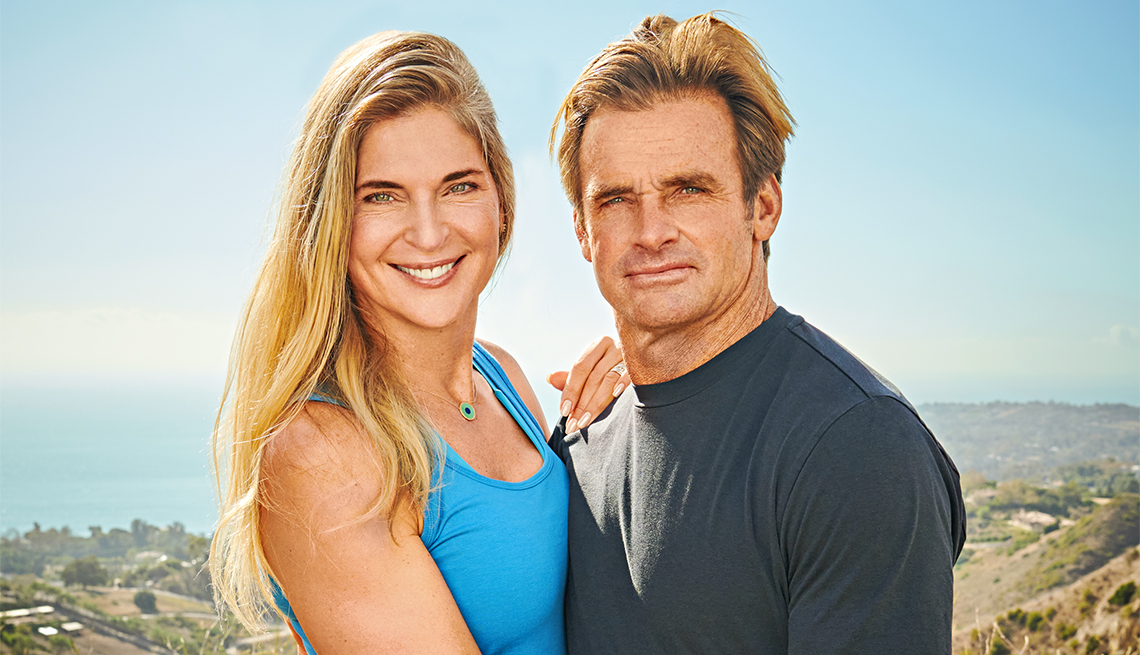
Gabrielle deGroot Redford is a features editor for AARP The Magazine. She cycles, swims, and runs after her kids (almost every day).