Photo by Jana Leon
|
Living Longer: Science
By Joe Treen, September & October 2006
In the last few years, researchers have made some amazing discoveries about how and why we age. Here’s what they’ve learned and why we may be on the brink of truly being able to extend life
|
Ordinarily, no one would compare Edward Rondthaler to a naked mole rat. The idea is preposterous. Ed is a charming, gregarious man of many interests who writes songs and children's stories and a weekly letter to the editor for his newspaper in Croton-on-Hudson, New York. Naked mole rats are bizarre East African rodents that live underground in beelike colonies and, depending on your point of view, are ugly, hideously ugly, or cute in the way bulldogs or Shar-Peis can be cute. But Ed and naked mole rats do, in fact, have one thing in common: longevity. Naked mole rats live ten times longer than any other mammal their size—up to 30 years. Ed is 101.
That puts both of them squarely in the sights of the nation's scientists who want to know one thing: what do Ed and naked mole rats have that the rest of us don't? What makes them so long-lived and so healthy at the same time? Is it their genes? their diet? their environment? all (or none) of the above? Scientists have been asking questions like these for years, but it's only in the past two decades that they've started to get solid answers on how to extend life while forestalling age-related diseases such as cancer and diabetes. And now, it seems, we may be on the verge of a longevity revolution. "How close we are, I don't know," says a leading biologist, Cynthia Kenyon, Ph.D., of the University of California at San Francisco. "But the mindset of people has changed. They used to think, 'There's nothing you can do about aging. You just age.' Now there's a feeling that it might be possible to slow down aging in people."

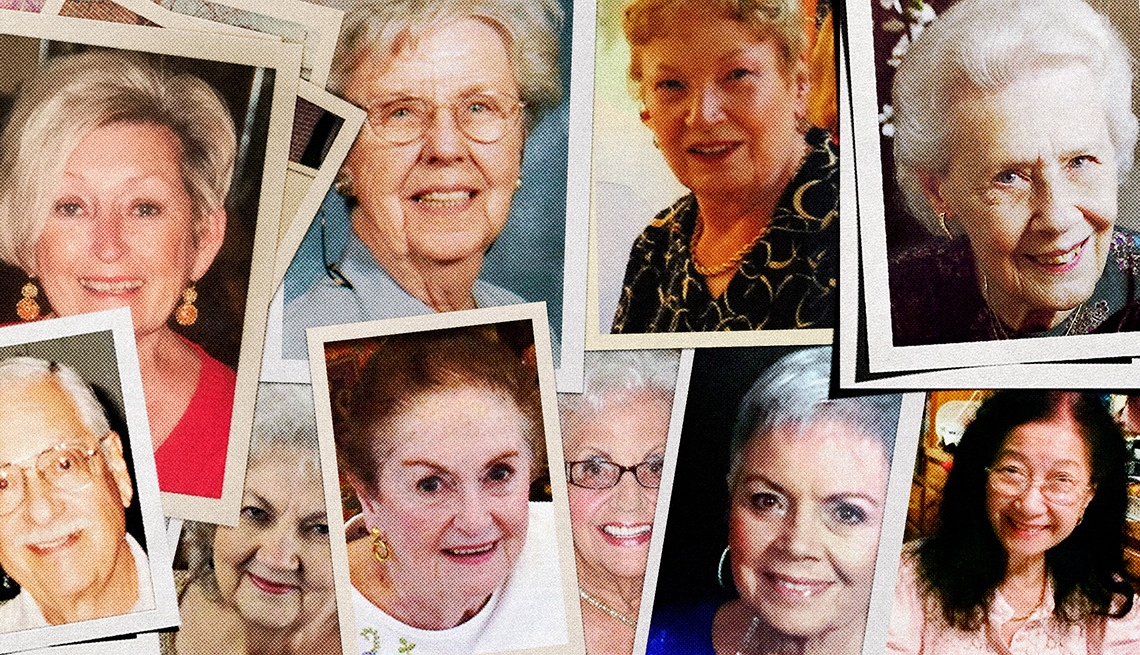
If so, Ed is the perfect model (we'll get back to the naked mole rat later). Like most of the 55,000 centenarians in the United States, he comes from a long-lived family. His father and three of his grandparents all lived into their 80s; his sister, Jane, is 91. A paragon of good living, he has never smoked, keeps his weight down, and has avoided all but the occasional social drink his entire life. He never formally exercised, but he did walk a hilly mile to and from the commuter train for 47 years. (He didn't give up his typographic-design business until he was 83.)
To date Ed has escaped every major illness that befalls so many people over age 50: cancer, diabetes, heart attack, stroke, and Alzheimer's. Oh, once he got lightheaded while working in the yard and was rushed to the hospital. But it was a false alarm. Naturally he wrote a song about it, "A Little Bit of Dizzy Done It All," which he is apt to sing at the drop of a hat. His many pun-filled songs are part of his cheery, positive outlook, one he maintains even though he clearly misses Dorothy, his wife of 72 years, who died in 2002 at age 97. One source of this upbeat nature seems to be a lifetime of religious training and belief. (Both his father and grandfather were Moravian bishops.) Another is his independence: he still drives, and he resides in the log home on the Croton River that he and "Dot" bought in 1941.
Additional Resources
For more information and the latest biomedical research on aging, visit the websites of the American Federation for Aging Research: www.afar.org, www.infoaging.org, and www.healthcompass.org.
Ask Ed why he has lived so long and you get a fairly straightforward answer: "I haven't the foggiest idea." But various centenarian studies (of Okinawans, Seventh-day Adventists, Sardinian men, Ashkenazi Jews) have found that many of Ed's personal traits and lifestyle habits—consistent exercise, not smoking, an ability to deal with stress, long-standing religious beliefs, an independent spirit—are common denominators among the very old. (See the articles on diet, exercise, and stress.) And while every trend has exceptions (the longest-lived woman in history, Jeanne Calment, didn't quit smoking until five years before she died—at 122), many long-lived people share these common traits.
We used to think, ‘There’s nothing you can do about aging. You just age.’ Now there’s a feeling that it might be possible to slow it down.
Also like Ed, they tend to come from long-lived families. "Longevity is really very highly heritable," says Nir Barzilai, M.D., director of the Institute for Aging Research at the Albert Einstein College of Medicine in New York City. Which is not to say you can't live to 105 if your parents or grandparents died young. "There's a difference between being familial and genetic," says Dellara Terry, M.D., associate director of the New England Centenarian Study. Family behaviors—such as diet, smoking, and exercise—might contribute just as much as genes, she says. "So genetics is just one piece."
So why and how do we age, exactly? In recent years scientists have narrowed the theories on aging from more than 300 to a manageable dozen or two, and they've divided them loosely into two categories: biological processes, and wear and tear. The first group, which we don't have much control over (at least not yet), concerns how our cells and genes work; the second looks at the impact of damage from food, drink, tobacco, stress, and the environment. Says Richard Sprott, Ph.D., executive director of the Ellison Medical Foundation, which funds longevity research: "Most of us think what really happens is a combination of both."
How the clock ticks
The most widely accepted of all the aging theories, evolutionary senescence, is the parent and grandparent of many other theories. It was originally put forth in 1952 by Nobel Prize winner Peter Medawar, a British scientist who argued that natural selection—sometimes called survival of the fittest—fails when it comes to longevity. For the most part, older people do not have children. If they did, natural selection would favor those whose genes were associated with long life. Instead, genes that hasten aging or cause life-shortening diseases get passed along from one generation to another.
The next generation of scientists took Medawar's concept a step further, theorizing that genes that are useful when we are young may have harmful effects later on. This is sometimes known as the tradeoff theory, since genes that may help you stay healthy so you can reproduce also could cause you to age faster. An example is p53, a gene that helps prevent cancer in young people but may stop the body from replacing aging tissues when the person gets older.
A third important prereproduction-versus-postreproduction theory is called disposable soma. Given the reality of a cruel life in the wild, animals with many predators—mice, for example—appear to put all their energies into reproducing. They have no reason to save metabolic energy for their old age. Humans, on the other hand, contend with few predators and reproduce over the span of many years. "It's a zero-sum game," says biologist Daniel Promislow, Ph.D., of the University of Georgia. "If you put more into reproduction, you've got less to put into maintenance and repair."
Wear and tear
The other major theories of aging—and the ones that most interest scientists now—concern how our bodies respond to environmental damage such as from tobacco, pollution, and too much food. For reasons that are still unclear, our bodies become increasingly inefficient at turning oxygen into energy as we get older. We produce more and more molecules with an unpaired electron—known as free radicals—that can damage our DNA. This damage by free radicals, often likened to browning apples or rusting metal, seems to be a factor in cancer, Alzheimer's, diabetes, heart disease, and macular degeneration. Why someone like Ed Rondthaler seems to have avoided the dangers of oxidation is an open question, though there is some evidence that exercising and reducing stress can help. (See "Living Longer: Exercise," and "Living Longer: Balance.") "I think a lot of living to 100 years old is due to luck," says comparative biologist Steven Austad, Ph.D., a leading longevity expert at the University of Texas Health Science Center in San Antonio. "You know, this free radical hits your DNA in this spot and that doesn't do anything, and it hits my DNA in another spot and gives me cancer."
Luck aside, the discovery that has generated the most excitement among scientists who study why we age appears to be the existence of telomeres—chunks of DNA at the ends of each chromosome in the nucleus of every cell that are sometimes likened to a string of beads. Back in 1961, Leonard Hayflick, Ph.D., an anatomy professor at the University of California at San Francisco, demonstrated that cells have their own biological clock, one that ticks off the days of their life span. Thirty years later other scientists discovered the reason: in humans, each time the cell divides, one of the beads—or telomeres—disappears. When there are no more telomeres left, we start to die. There is a way to stop this, Sprott says. Telomeres "don't get shorter if an enzyme called telomerase is in the cell at the same time. It puts back a bead to replace the lost bead. When that happens, the cell is immortal." The trouble is, Sprott adds, "it's great for the cell but not for us. Because that's what we call cancer."
Hence the excitement. "We've known for many years that there is a very strong relationship between aging and cancer," Sprott says. Scientists are now examining whether cancer can be caused by a sudden recurrence of telomerase as well as whether telomerase-rich stem cells can be used to slow aging.
Manipulating genes
All of these theories presuppose that the life span of any given species is fixed. Horses live to one age; goldfish, to another. But what if biologists could change life span by manipulating genes? The first breakthrough came in 1988 when Thomas Johnson of the University of Colorado extended the life of a tiny roundworm called Caenorhabditis elegans by 60 percent. Five years later Kenyon found several ways to double the life of C. elegans by speeding up or slowing down certain genes. Soon other scientists were achieving similar results by manipulating genes in yeast, fruit flies, and lab mice.
Biologists shortly discovered that certain genes—known generally as silent information regulators, or sirtuins—could be triggered by significantly restricting the food intake of the animals. In short, scientists had confirmed a long-suspected link between the mechanisms for aging and those for processing food. Indeed, in study after study, animals—from worms to primates—lived longer when their diet was cut by as much as 40 percent of the norm. This meager diet also retarded age-related diseases such as cancer and diabetes. One of the key researchers in this area, David Sinclair, Ph.D., of Harvard Medical School, compares the process to "a 911 call going out to the body. That alarm tells every cell in the body that it's time to hunker down and get as healthy as possible." All of a sudden, free radicals—those nasty villains created by too much oxidation—begin to be mopped up, nerve cells in the brain that might otherwise die suddenly become healthier, glucose and insulin levels become stabilized, and cells become better defended against the ravages of cellular aging.
A recent study supports the idea that caloric restriction works in humans. But is it a good idea? Many scientists say it can lead to premature osteoporosis, a susceptibility to infectious disease, and infertility. Meanwhile, Sinclair and Kenyon have each cofounded rival biotech companies in Cambridge, Massachusetts, that are racing to develop a drug that can trigger the sirtuins without restricting calories. (See "Living Longer: The Future").
But what about the naked mole rat?
Sometimes called sausages with fangs, naked mole rats are the longest-living rodents in the world. They are virtually hairless, with skin so thin you can see their livers and spleens. They spend so much time in underground tunnels that they are nearly blind. And they are breaking any number of theories of aging.
For starters, they have extremely high levels of damaged DNA from oxidation—eight to ten times that of mice, which are about the same size. They never get cancer, even though they have very short telomeres and no telomerase. (Also, no vitamin D, but that's another story.) And their system of reproduction leaves the disposable soma theory in tatters. Only one female per colony breeds, and she has 28 pups every three months until she dies, at around age 30. "Naked mole rats are providing real insight into the aging process because they seem to be doing so many things slightly differently," says Rochelle Buffenstein, Ph.D., a City College of New York biologist who has studied the rodents for years.
This has prompted a completely new line of research. "The questions we're trying to get a handle on are multiple: Do they show typical changes with aging that you would expect in mammals? Does their metabolism change? Does their body composition change?" Buffenstein says. "Maybe if we find out what they do, we can find what to do for humans as well."
And if it turns out the theories of aging don't hold up in naked mole rats, it doesn't necessarily mean they won't hold up in humans. "Right now the message is that there seem to be lots of different ways to be long-lived," says biologist Austad. "There's one way to be a long-lived mouse and another way to be a long-lived bat and another way to be a long-lived python."
For all the research, the best way to be a long-lived human like Ed Rondthaler seems relatively uncomplicated: eat an antioxidant-rich diet, avoid obvious environmental pollution such as cigarettes, get lots of exercise, and find ways to cope with stress. "Some would have you believe that the key to longevity is in a pill bottle," Sprott says. "My view is that it's not there. All of those medicines and vitamins that are supposed to make you live a very long time are modern-day snake oil. The real key is diet and exercise. We don't have anything that comes out of a pill bottle that does a better job."
Joe Treen, a former editor at People and Discover, was named "2006 Magazine Professional of the Year" by the Association for Education in Journalism and Mass Communication.
|