November 21, 2009


Advertisement


Portrait by Art Brewer

Health Nut

By Kate Meyers, March & April 2007

In 1958 Dorian Paskowitz, M.D., concluded that when you have your health you really do have everything. So off he went with his bride to pursue a vagabond life of surfing, lean eating, and (after a while) raising nine kids in a camper built for four. Now 86, he has no regrets. But does his fervor for fitness go too far?


It is a Sunday afternoon at the Honolulu airport, and Dorian “Doc” Paskowitz has parked his red 1986 Honda Civic with the broken hatchback in the short-term section. He’s wearing a tie (the only one he owns), and he’s here to pick up his wife of 48 years, Juliette, who has been in the San Fernando Valley visiting 3 of their 17 grandchildren. He will kiss her sweetly and hang a lei around her neck. “Sometimes he wears a sarong with some shell necklaces, and sometimes he gets all dressed up. It’s always a surprise,” she says, clearly tickled by the charm of her suitor.

Days later, as Juliette, 75, floats in the mild surf at Sans Souci Beach in Waikiki, and Doc, 86, swims slow, determined laps just beyond, she explains what she feels is the secret to staying happily married for so long: “You have to find someone you want to make love to for the rest of your life.”

This would make Doc Paskowitz incredibly proud. In his half-century pursuit of the perfectly healthy life, there are three things he’s found that make life worth living—surfing, lovemaking, and parenting—and from the day he met Juliette, all three have been the objects of his outsize zeal. Dropping out of the traditional working world in 1958, this Stanford-educated Jewish doctor and his six-foot Mexican American bride raised an eight-boy, one-girl pack of water people, a wandering tribe of surfers swept up in their father’s obsessive experiment in achieving “superior well-being.”

Now all that is about to go public. With the expected release this summer of Surfwise, a documentary about his uncompromising life, Doc is gearing up for the spotlight. Viewers of the film may be aghast at the Paskowitz clan’s years of living out of cars and campers—without a fixed address, steady paycheck, regular schooling, or a shred of privacy. Doc, however—headstrong as only a true believer can be—has no regrets. He’s focused on delivering his hard-won wisdom to the world, which isn’t “Live as I lived” so much as “Health must be earned every day of your life.”

“I’ll tell you what,” he says on the phone from Honolulu, where he settled with Juliette in 1998. “If you read my book, Surfing and Health, and if you think I can help people, then I’ll agree to talk to you.” His tome arrived the next day, a 401-page, self-published typescript whose title does it no justice. Surfing and Health (available at www.alohadoc.com) offers advice and philosophy in equal doses. Weaving in surf-soaked parables and tales from his life, he makes the case that care of the body is not merely the key to physical happiness but a moral imperative, the foundation of ethical conduct and love.

Doc’s way is unsparing. As self-help gurus go, he’s Old Testament. You reap what you sow. Eating fat begets fat. His five pillars of health are nothing you haven’t heard: diet (lots of fruits and vegetables and a little meat, what he calls the universal meal), exercise (to burn off what we eat), rest (eight hours daily), recreation (joyful play that re-creates you), and positive attitudes of mind. But his passionate advocacy for making health your first concern is extraordinary.

“Can I tell you something,” he not so much asks as commands. He is sitting at the breakfast table of his one-bedroom apartment in Honolulu, surrounded by photos of ancestors and offspring. Bare-chested, he’s staring down at the plastic tray, a replica of a Gauguin painting, that holds his unvarying breakfast of fruit and seven-grain cereal. Then he looks up. “People are digging their own graves with their knives and forks. If a bird is 50 percent overweight, do you think it can fly?”

Our biggest enemy, he never tires of saying, is fat. “Eighty-five percent of all life-threatening diseases come from eating too much fat,” he pronounces. “The richer a society is, the more difficulty we have staying lean.”

Doc's way is unsparing. As self-help gurus go, he's Old Testament. You reap what you sow.

Men should work to be around 17 percent fat, Doc believes; women, around 22 percent. “If you ground up the average American, you wouldn’t be able to sell him over the counter for hamburger,” he notes. “He’d be far fatter than the law allows.” Then there are the standard charts of healthy weight, which allow us to gain a bit as we age. Paskowitz calls them malarkey. “Show me one wild animal that as it gets older, it gets fatter,” he says. “If an animal gets fatter, he’ll get eaten.”

“Doc was before his time in his observations, and everyone else is catching up,” says Honolulu neurologist Tom Drazin, a friend and fellow surfer. “He lives what he preaches. He practices it every day. Doc’s cholesterol is 170—lower than mine at age 48. We’re having a pull-up contest in two weeks.”

By all accounts, Doc hasn’t had a candy bar or a spread of butter in 50 years. He usually consumes two meals a day, cooked and served by Juliette. Although a hip replacement in January 2006 marked a hiatus in his 74 years of surfing, in six weeks he was back standing on his board, riding waist-high curls at Waikiki. For five years before that, he had surfed on his knees.

Doc’s proud because even though he’s got complaints (an enlarged prostate, can’t hear all that well), unlike most 86-year-olds he takes no medication, can swim a mile, and can hold his breath for a minute. And, he’ll be very happy to tell you, he’s making love three times a week. “You can be a very old car and still be in the race,” he says smiling, looking a bit like Gandhi.


Surfing, of course, is Doc’s preferred fourth pillar. It was literally how he re-created himself in the 1950s after two marriages had failed and the feeling that he wasn’t helping his patients enough left him rudderless. Weekends surfing with boyhood chums on the California coast at San Onofre was his only joy. Even when he went to Israel in 1956, still grappling with how to turn himself, at 35, from “a spoiled, pampered, over-protected boy” into a man, he brought a surfboard and stowed it on the coast before going on a walkabout in his ancestral desert.

What began as a soul-searching last resort became his chosen lifestyle. “He lived as a nomad,” says Abraham Paskowitz, Doc and Juliette’s thirdborn. “He traded fish for drinking water. He believed money was the root of all evil.” And when he got back to surfing, he got enough locals excited about the sport that he’s now known as the father of Israeli surfing.

Returning to California he took a job running the hospital on Catalina Island, still concerned that a doctor shouldn’t prosper from others’ misery. One evening he followed two women into a restaurant. He asked the hostess to make an introduction, and when he felt the conversation was going nowhere announced, “It’s obvious that I’m making very little progress here.” To this, the tall one, a stunning telephone operator named Juliette, remarked, “You may be making more progress than you think.”

Before the evening’s end, Dorian declared she’d give birth to his seven sons. Juliette thought that was “the sexiest, most wonderful idea” she’d ever heard. (Nine years later, with the arrival of Salvador, the prophecy came true.)

'People are digging their own graves with their knives and forks,' says Doc.

Their adventures together began with a trip. “I told her I had just returned from Israel, and I don’t think I ever would have been a whole person had I not understood my roots,” Doc recalls. He fixed up a ’49 Studebaker with a water tank and platform bed and they drove 5,000 miles through Mexico.

They lived off the sea and built bonfires at night. In a peaceful spot in Guaymas, with David already in Juliette’s belly, the couple were married by a justice of the peace. It was at this same spot that Doc had an epiphany: “A very charismatic caballero and his son galloped up on stallions and joined our campfire. This boy looked up at his father with such adoration, and I thought, ‘That’s what I want more than anything else.’ His bag was the horse; mine was surfing. And when I took my kids out, I wanted them to look at me in the same way.”


Talk to the Paskowitz progeny and they tell tales of their father’s iron will as well as their outlandish freedom growing up. “It was like the Lost Boys and Lord of the Flies combined,” says Abraham, who treasures memories of “the greatest childhood that could ever be lived.”

“Every day we’d get in the camper and we’d go to some amazing place with a beautiful beach and great fishing, and you’d have all of your brothers with you and go exploring.”

Given the dangers of the wild and the clan’s itinerant existence, “it was required that we follow certain rules,” recalls David, who as eldest was saddled with herding his siblings. And Doc was unbending. “A lot of times he resorted to force. He would beat us all into one corner with a T-shirt or a bungee cord.”

It was a decidedly masculine scene. “My dad, God love him, is the most chauvinistic man that ever walked on the planet. I didn’t know I was a girl until I was, like, 16,” says Navah, the only daughter, who got down to 7 percent body fat in her youth. “I’ve had eating disorders my whole life. Every single thing we put in our mouths he would scrutinize.” Navah considers her robust father anorexic.

There are only glimmers of awareness in Doc of the tyranny he imposed, perhaps because he considers his precepts nature’s laws rather than his own. In Surfing and Health he dedicates a section called “Motivation” to himself: “I don’t know anybody who WANTS TO BE HEALTHY more than I do. Or [is] more scared NOT to [be]. When I skip a day of walking or when I gorge too much, I feel guilty—very guilty.”

During their years in campers each child had a three-by-three-foot cubby for stowing belongings. Everybody had a chore. Jonathan (child number two) was in charge of tying surfboards to the top. Navah was on dish patrol. They surfed, they explored. Juliette sang Bach arias to the children, and they had projects—reading, drawing, fixing the car. This was homeschooling before the term existed. They survived on the seven-grain cereal—the kids called it quicksand—and peanut butter on whole-grain breads that Juliette baked in the camper’s tiny oven. They ate plenty of rice, beans, and fish. When they could afford it, there was chicken and challah on the Sabbath.

“Our life was so existential,” says Juliette. “We’d wake up to the sun. The waves are good, the waves are not so good. It’s not that we didn’t read books or listen to classical music. We had all of that. We didn’t have a beautiful home. We didn’t have a washer and dryer. But we had kids that were close to us, and they were our dream.”

It was the life Doc wanted, and society’s norms didn’t apply. “Our day-to-day job was to parent our children in a way that they emerged from childhood as strong, wonderful adults,” he says.

All the children except Abraham now live in California, with occupations that run from movie producer to rock singer to surf instructor. At the Paskowitz apartment the phone rings constantly, always one of the children checking in. But the passage to adulthood was often rocky, and their lack of formal education cost them. Only one of the kids went to college: Moses (number five) won a football scholarship but didn’t graduate.

“During my rebellious teenage years of course I cursed my dad for not sending me to school,” says Navah, a mother of three. “I would have been a great student. That, to me, was the only real thing that stands out as a negative.”

Doc tried to ease their way into the world in 1972 by starting the Paskowitz Surf Camp in California, a summer surfing school now in its 35th year. He says he hoped “the allure of money and a new board would keep the kids hanging around.”

But the plan backfired. “The summers gave us a peek into what we were missing, and that sparked a lot of brothers leaving the fold,” says Navah. Jonathan (a producer of Surfwise) was the first. He took off at 14 after getting a taste of freedom at 11, when he went to Israel to visit David, who was studying for his bar mitzvah there. Almost all the children left in their teens, usually staying with a friend or an older brother, working whatever jobs they could find to get by.

“We should have at least learned the basic strategies of walking out the front door,” says David. “When I left, I still believed whatever adults said was true. I had never written a check or paid a bill. I didn’t have a Social Security card.”

Doc’s strengths and limitations go hand in hand, says Doug Pray, the director of Surfwise. “He’s the classic charismatic leader, somebody who’s very dominant and used to getting his way,” he observes. “And there’s always a price to be paid for that. He’s inspired thousands of surfers. I’ll go places and people just worship him. But it does have to be his way.”


Membership – Join, renew, or learn about exclusive AARP member benefits.

The money Doc scraped together wandering with his brood doesn’t come along so easily anymore. He used to work in emergency rooms for a few days and make enough to provide for his family for a month. Or he’d spend a few months as the on-set physician for TV’s Gunsmoke, the camper parked nearby. He’s still licensed to practice in California and Hawaii, but today he and Juliette mostly get money from the surf camp (run by fourth child Israel, a former surfing champion), their monthly Social Security checks, and a few of their kids who can afford to help.

For years Doc didn’t worry about the future. On their travels in Mexico he was the “orange doctor,” so named for the only form of payment he took. Somehow they always got by. But now he’d like to have a cushion to leave his wife—part of the motivation for his writing Surfing and Health. At the moment there’s $300 in the savings account, and Juliette has put off fixing the brakes on the Honda.

“Forty-eight years—all for him,” she says on a rare breakfast out, happy to be dining on French toast. “Sometimes I get a little claustrophobic and think ‘What if?’ But then I think of my children. I have no regrets. I would do it again in a second.”

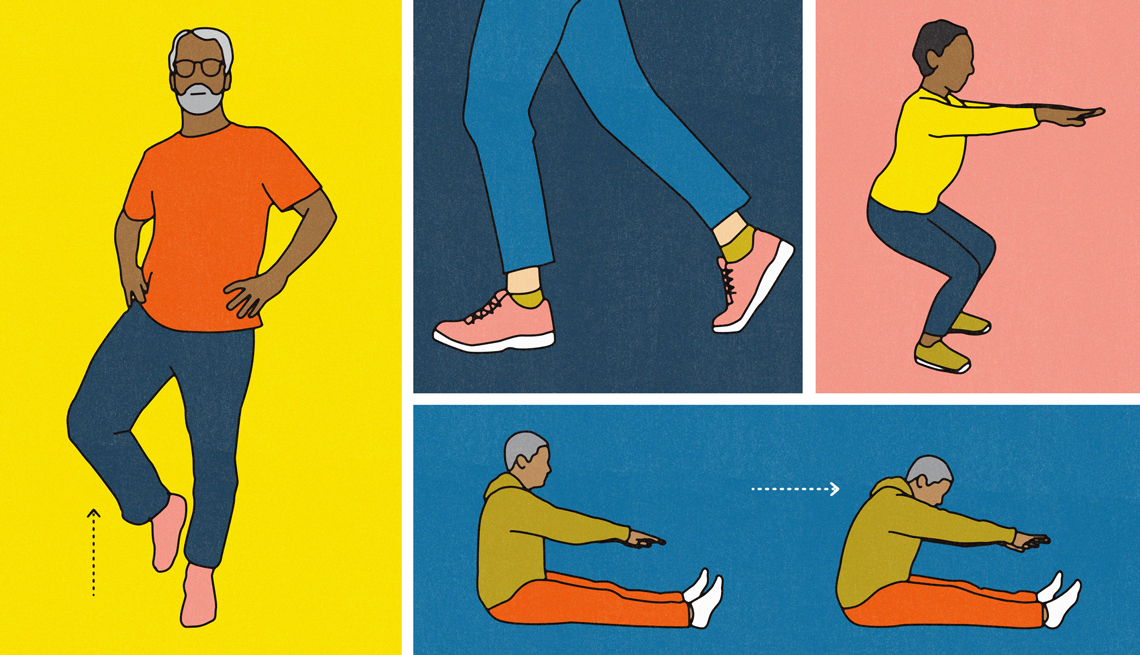
Every morning Doc spends an hour and a quarter doing deep breathing, squats, flexibility exercises, balance and agility exercises, and some work with a ten-pound barbell. Every morning he prays and converses with those no longer here—Jews who died in the Holocaust, fellow surfers he loved. “I pray for wisdom every day. I pray for the ability to be a good doctor.”

Nearly every afternoon he and Juliette visit the sea. Juliette attends to “Poppa,” takes digital photos of him in the surf, and sends them off to friends and family. “She’s the real hero of the story,” Doc says, worried that perhaps the listener didn’t get that, didn’t realize that she is the calm to his storm, and that her love and devotion made it all work. And sometimes, when he’s talking, she will just stand and walk over and plant a kiss on her man. It’s clear she’s still pretty mad about the Doc. “I’ll pencil him in,” she explains of their afternoon romps. “He’ll allow me a little champagne, and we’ll have a lot of fun.”

Kate Meyers lives in Colorado. Her writing has appeared in Life, InStyle, Sports Illustrated, Fortune, Entertainment Weekly, and Golf. Doc Paskowitz taught her how to surf in 15 minutes.

Online Extra: Read an excerpt from Surfing and Health