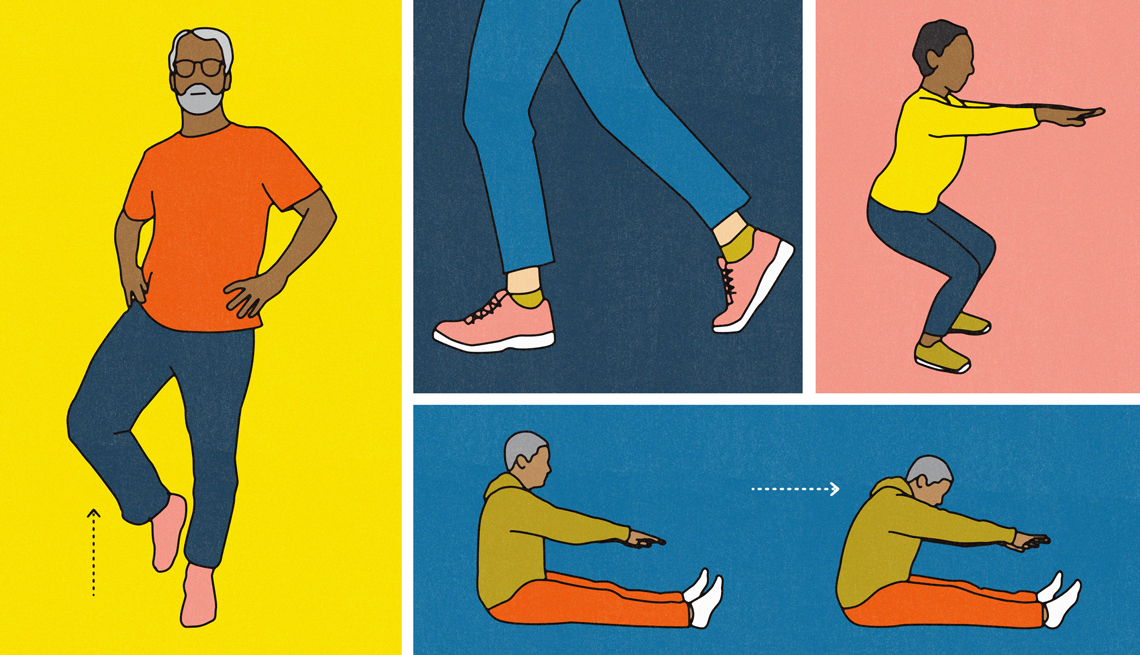
Illustration by Owen Smith
|
Diabetes Denial
By Kelly Griffin, November & December 2005
Five million Americans have this disease and don’t know it. Are you one of them?
|
When David Mendosa was diagnosed with diabetes in 1994, his blood sugar was triple the normal level. The Colorado writer had probably already had the disease for several years—during which it may have been silently chipping away at his eyesight, kidney function, and cardiovascular health. "I didn't know anything about diabetes," recalls Mendosa, 70. "But when I learned it was a chronic condition that often led to terrible complications, I was scared."
Traumatic as it was, Mendosa's experience was not unusual. The diabetes rate is skyrocketing, especially among people over 40, and of the 18.2 million Americans estimated to have the disease, 5.2 million don't even know they have it. The longer diabetes goes without treatment, the greater its potential for harm.
Though there is no cure yet, doctors are learning more about the disease every day. Many people with diabetes don't even need medicine—and those who do have new options. There's even help for people who find managing the disease too confusing or inconvenient.
Of course, all those advances can't help you if you don't know you have the disease. So find out what your blood sugar level is, and if you have diabetes, get serious about controlling it.
Do You Have It?
Though early diabetes may have no symptoms, possible warning signs include excessive thirst and urination, daytime fatigue, and blurred vision.
The most common test for diabetes may not be the most accurate one. The fasting plasma glucose test—in which blood is drawn after at least eight hours without food—is relatively cheap and easy, and it's recommended by the American Diabetes Association (ADA). But some studies suggest this test may miss up to half the people with type 2 diabetes. In that form of the disease, the body's tissues gradually become less able to use the hormone insulin to take in glucose from the blood for fuel. (Type 1 diabetes, in which the pancreas stops producing insulin, is usually diagnosed by young adulthood.)
In most cases, the first sign of type 2 diabetes is high blood sugar after meals, also called postprandial hyperglycemia. Only later in the disease does blood sugar remain high after hours of fasting. That's one reason many early cases of type 2 diabetes go undetected.
More sensitive is the oral glucose tolerance test—essentially a treadmill test for your pancreas. You fast overnight, have blood drawn, then drink a sugar solution and wait. Over the next few hours, more blood is drawn periodically. It's more expensive and more of a hassle than the fasting test, which is partly why some experts—including those at the ADA—oppose its widespread use. But many other experts, including several consulted for this story, consider it to be the gold standard for diagnosing diabetes.
First Resorts: Diet and Fitness
If you have high blood sugar and are overweight or sedentary, brace yourself for a lecture from the doctor. Losing weight and exercising, though not high-tech, are two very effective means of getting blood sugar under control.
After he was diagnosed, David Mendosa dieted and started a walking program, bringing his blood sugar back to normal within six months. "In a way, my diagnosis was the best thing that could have happened to me," he says.
Even if you don't have diabetes, tests might detect prediabetes: blood sugar that is elevated but not yet diabetic. This diagnosis is an opportunity: weight loss and exercise can prevent diabetes in people with prediabetes. "So many people feel that lifestyle changes are futile," says Matthew Riddle, M.D., professor of medicine at Oregon Health & Science University. "They sure aren't futile in the early stages."
In a nationwide trial called the Diabetes Prevention Program, people with prediabetes reduced their risk of developing type 2 diabetes by more than half simply by losing weight and exercising. The results were so compelling that the study was halted a year early, in 2001.
The study's most surprising finding concerned participants 60 and over. Researchers expected older people to have a harder time sticking to the diet and exercise program. In fact, they adapted better than younger participants did and benefited more from the changes they made, reducing their risk of diabetes by a stunning 71 percent.
Exercise actually reduces blood sugar—and helps prevent diabetes in those at risk.
"It was completely counterintuitive," says David Nathan, M.D., of Harvard Medical School, a principal investigator for the study. "We thought, They're older, their lifestyles are much more ingrained. But in fact, just the opposite occurred."
Besides helping with weight loss, exercise boosts the body's ability to control blood sugar. "When you exercise, glucose is taken up by the exercising muscle," says Edward Horton, M.D., director of clinical research at the Harvard-affiliated Joslin Diabetes Center. In other words, you can reduce your blood sugar by going for a brisk walk. Also, exercise changes the muscle to make it more sensitive to insulin.
Since exercise is also known to improve your mood, it's especially valuable if you have diabetes, because being depressed can keep you from taking care of yourself—a potentially dangerous situation.
When to Add Drugs
While a healthy lifestyle might be the best treatment for a while, it is essential for people with diabetes to be vigilant and to act swiftly if medicine is needed.
"Moving on to the next step of therapy—from lifestyle to the first pill and from one oral drug to two—has traditionally taken too long," says Riddle. "During that time, the harmful effects of the high blood sugar are just marching right along."
The blood marker to watch is glycosylated hemoglobin (abbreviated as HbA1c, or simply A1c)—the amount of glucose that is attached to hemoglobin, a protein in red blood cells. The higher the A1c, the higher blood glucose has been over the previous two or three months. Even if your blood sugar is usually under control, unnoticed spikes can cause A1c to rise. People without diabetes typically have an A1c in the 4 to 6 percent range. Those with diabetes can minimize the risk of heart disease and of eye, nerve, and kidney damage by keeping A1c below 7 percent.
As if the long-term benefits of keeping blood sugar down aren't motivation enough, there are immediate payoffs as well. "The chronic complications take years and years to develop," explains Steven Edelman, M.D., a professor of medicine at the Univer-
sity of California, San Diego, who has diabetes himself. "What I call the acute complications affect quality of life on a day-to-day basis." In addition to excessive thirst and urination, daytime tiredness, and blurry vision, symptoms could include poor wound healing, problems with sleep, and cognitive impairment. Even a small improvement in A1c can reverse this trend—and it can do so in a matter of weeks or even days.
The Latest Treatments
If you need drugs to control blood sugar, there are more options than ever. Since 1995 at least seven new oral medications have become available. These include drugs that lower the liver's glucose output, such as Glucophage (metformin); drugs that slow carbohydrate digestion, such as Precose (acarbose) and Glyset (miglitol); drugs that raise cells' sensitivity to insulin, such as Actos (pioglitazone) and Avandia (rosiglitazone); and drugs that stimulate insulin secretion, such as Starlix (nateglinide) and Prandin (repaglinide).
New this year are Symlin (pramlintide) and Byetta (exenatide). These drugs have to be given via injection, but like metformin—and unlike most other oral diabetes drugs—they have the added benefit of promoting weight loss. Symlin boosts insulin's effect; Byetta boosts insulin secretion.
There have also been tremendous improvements in insulins. Fast-acting insulins, given just before meals, work in minutes, while slow-acting insulins, given just before bed, help keep blood sugar steady overnight. Insulin needles have gotten smaller, and insulin pens can deliver a precise dose with the press of a button. External insulin pumps free people from the hassle of multiple daily injections. Coming down the pike: inhaled insulin, an insulin patch, and an implanted insulin pump.
Next Steps
For all these advances, the rate of preventable complications from diabetes is still frustratingly high. Some patients don't know how to stay healthy; others know but can't motivate themselves to do it. Meeting with a certified diabetes educator (CDE) can help. CDEs don't just educate patients in self-care; they also help patients identify roadblocks and overcome them. Medicare provides for 10 hours of diabetes training in the first year and two hours of follow-up training each year after that.
"So many people can manage and plan for their retirement," says Hertzel Gerstein, M.D., professor of medicine at McMaster University in Ontario, Canada. "Managing diabetes today is an investment in your future health."
Mendosa agrees. Once a business journalist, he now writes about diabetes full-time. "The only real problem with diabetes is the complications," he says. "It's much, much easier to prevent than to cure. So you've got to control the disease yourself, and you've got to control it now."
North Carolina freelancer Kelly Griffin contributed to our special report on "You're Wiser Now" in the September & October 2005 issue.
|