Photo by Hugh Kretschmer
|
The Best Medicine
By Sheree Crute, March & April 2008
Once upon a time mainstream doctors looked askance at alternative treatments, especially when it came to chronic diseases. Now, the medical establishment is embracing a new way to heal
|

On a beautifully clear evening last July, members of the Chernoff clan cheerfully took to the dance floor in a Laguna Woods, California, recreation center, to celebrate the birthdays of Ann Chernoff Binder, 90, and Freda Chernoff Friedman, 85. The family marveled as the sisters sashayed across the room with grace. But the real moment of triumph came when Lori Chernoff-Kwiatkowski, a cherubic 51-year-old with a heart-shaped face and funky red glasses, joined her 92-year-old cousin, Bessie Chernoff Pollicove, on the dance floor. "I was actually dancing," Chernoff-Kwiatkowski says with amazement. After enduring crippling pain from the cancer that developed in her spine after several bouts with breast cancer, Chernoff-Kwiatkowski, an interior designer from Missouri City, Texas, danced her way to a fresh start that night.
Her cancer, diagnosed 13 years ago, was in remission, but equally heartening: the pain from the cancer's damage to her spine was gone. And that, Chernoff-Kwiatkowski says, was a battle she'd wondered if she'd ever win. "I'd lost all of my dreams," she recalls. She'd tried the gamut of recommended treatments, from prescription pills to radiation, but some days, she says, merely strolling the aisles of a grocery store remained an act of sheer will. "I had to walk on my tiptoes and just lean on that basket," she says. "At others times I couldn't even endure standing up."
"Now," she says, "I'm getting on with my life."
Chernoff-Kwiatkowski's change of luck came after deciding to try something new. For years she'd trekked the 25 miles from her home to Houston, to be treated at the University of Texas's highly regarded M.D. Anderson Cancer Center. But somehow she hadn't noticed the Place of Wellness, a pretty space inconspicuously tucked amid M.D. Anderson's pink and gray granite buildings.
She was glad when she did: the Place of Wellness is now one of the nation's most extensive hospital-based cancer treatment centers featuring integrative medicine—and it's at the forefront of a movement experts say is finally, after more than a decade of prodding from patients, gaining acceptance among the nation's top physicians and medical schools.
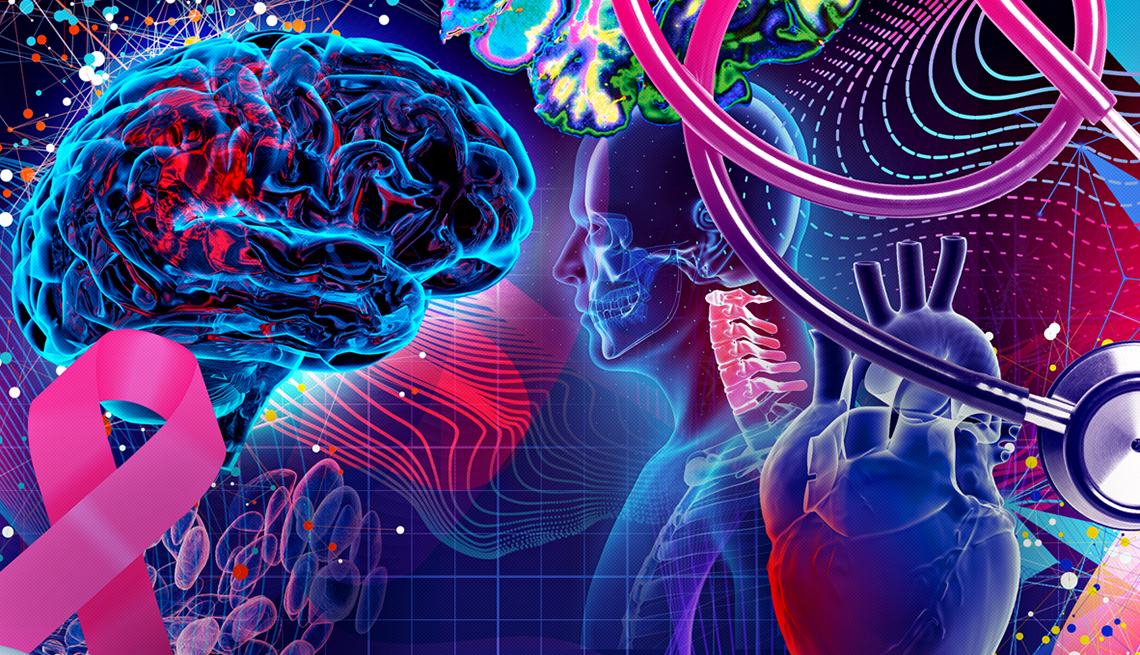
The philosophy at the heart of integrated care: people heal best when doctors address the ways biology, psychology, spirituality, and lifestyle all come together to affect their disease. To effectively achieve that, practitioners combine the best evidence-based conventional treatments with time-tested, well-researched alternative treatments such as meditation, yoga, acupuncture, healing touch, and herbal therapy. The result, advocates say, is a lessening of the stress, depression, pain, and fatigue suffered by many patients, particularly for those battling two of the nation's top killers—cancer and heart disease.
"It's all about improving quality of life," says Moshe Frenkel, M.D., medical director at the Place of Wellness. It's about first understanding a person's life story, his or her relationships, and how the illness affects his or her life—then going from there, he adds.
With its aromatherapy-tinged air, burbling fountains, mauve-toned meditation/yoga studios, and state-of-the art kitchens for cooking classes and lectures, the Place of Wellness is not exactly what Chernoff-Kwiatkowski expected to find in a city better known for beef, big oil, and barbecue. But with the blessings of her M.D. Anderson oncologist, who had recently guided her through another round of radiation therapy, she shored up her courage and met with one of the members of the integrated-care team, Meide Liu, M.D., L.Ac., an acupuncturist. Liu began by "asking me to tell the story of my pain," Chernoff-Kwiatkowski says, and then, in the quiet of a distinctly nonclinical space, comforted her with gentle words. Finally, Liu "inserted the needles and turned down the lights."
After three weeks of going to treatments three times a week, Chernoff-Kwiakowski says, she stopped taking her prescription pain medication. At six weeks, she was virtually pain free. And before long she was thinking about her next goal—"exercising again to take off the pounds I gained when I could barely move."
Fringe to Mainstream
Once upon a time a cancer patient like Chernoff-Kwiatkowski might have been considered a bit wacky for seeking out acupuncture to add to her array of conventional therapies. But after years of research and observation on the impact of integrated care, increasing numbers of physicians are buying into the essential message—that Western medicine is not the only effective approach to healing, and that often it can use a little help.
In recent years top medical institutions such as the Cleveland Clinic, Columbia University Medical Center, Dana-Farber Cancer Institute, Duke University Medical Center, and the Mayo Clinic, among others, have started or greatly expanded integrated-care programs for cancer, heart disease, and other illnesses, while increasing numbers of medical schools have begun designing curricula to train physicians in integrated medical care. Already, most states can boast at least one major hospital offering integrated care. And smaller integrated-care clinics are proliferating in cities throughout the country.
The momentum is being driven, in part, by the National Institutes of Health's (NIH's) National Center for Complementary and Alternative Medicine (NCCAM), which has funded more than 1,800 research studies at 260 institutions and which runs a consumer-information website that received 2.6 million inquiries in 2006 alone. In addition, foundations such as the Bravewell Collaborative and the Bernard Osher Foundation have begun funding physician training programs, along with comprehensive integrated-care centers.
But patient demand—and frustration—has been one of the most significant forces turning the tide. A 2007 AARP-NCCAM study found that two out of three adults 50 and over surveyed now use some type of alternative medical therapy. But nearly 70 percent report not talking to their doctors about it—in part because of skepticism about how much they think their doctors know, or because their physicians simply don't ask. The lack of communication has left many patients at risk for dangerous drug interactions and worse—and the medical community is now scrambling to act. Last October the journal Academic Medicine published the first-ever list of guiding principles to help doctors and medical students navigate the whole new world of integrated care. Meanwhile, the newly formed Society for Integrative Oncology, an organization of cancer-related health professionals, recently released new scientific guidelines for integrative-medicine research in the cancer field.
American medicine "is at the tipping point now," says Andrew Weil, M.D., arguably the nation's leading proponent of integrated care and the founder of one of the country's first integrative-medicine training programs, at the University of Arizona in Tucson. "I think people are really on the verge of getting the type of health care they've wanted in integrated care."
"This," Weil adds, "is the revolution in medicine called for years ago."
A Quiet Revolution
Like most things about sunny La Jolla, California, the campus of the Scripps Center for Integrative Medicine seems almost unreal in its beauty. White stone buildings rise above cliffs over the Pacific Ocean, and soft ocean breezes waft throughout palm-tree-lined walkways. It's hard to believe this is not an exclusive spa but rather a place where many of the patients come to do the hard work of healing heart disease.
On this day, just steps from the center's new walking-meditation labyrinth, 20 or so heart disease patients gather like anxious kids on the first day of school, learning to take their pulse. Most are people one might expect to see here: some are obese; others are 70-plus couples. Then there are the surprises, such as Steve Kenshur, a muscular 51-year-old marathon runner and Ironman triathlete who found out, about a year ago, that five of his arteries were blocked at least 90 percent each.
Listening intently in the back row, the salt-and-pepper-haired, San Diego-area father of four is discovering he will need more than exercise to overcome his hereditary risk for heart disease—his father died of it at 61—and that, specifically, he will need to learn to relieve the stress in his life. And he has plenty: two kids in college, a highly demanding job as a telecommunications account manager, an 81-year-old mother to care for.
Before Kenshur arrived at Scripps, his doctor had helped him head off a massive heart attack by inserting stents in three of his blocked arteries, in the hope of increasing blood flow. Then to get a second opinion on the other two blockages, he was referred to Scripps. There he met Mimi Guarneri, M.D., the center's founder, who recommended, instead of surgery, that Kenshur try the Healing Hearts program she created. It's a three-month course that teaches lifestyle change through such approaches as meditation, yoga, music therapy, nutrition, and exercise. A self-described "type A in type B clothing," Kenshur quickly signed up and got his marching orders: yoga, biofeedback, monitored exercise, and stress-reduction education.
The experience was eye-opening. Kenshur learned, for instance, to recognize that when he was rushing around, his heart was working at 125 beats per minute (the normal resting heart rate is about 70). "Now," Kenshur says, "I'm pacing myself more." He adopted a healthier diet, too, and says he expects to be one of the lucky ones who will actually reverse his heart disease—or at least keep additional blockages at bay.
Kenshur's odds for success are good, given the well-established connection between stress and heart disease—and immune function in general. It is this link, in fact, that's been a driving force in the movement toward integrated care, which emphasizes therapies that research has increasingly proven have stress-reduction benefits. Numerous studies, many funded by NIH, for example, show how treatments such as meditation reduce blood pressure and arterial restriction and lessen the physiological response to stress. Indeed, Scripps reports that the majority of patients who graduate from Healing Hearts leave with enhanced immune function, decreased angina, lower blood pressure and cholesterol, lower levels of stress, and a reduced need for surgery and heart medication.
And experts say that's nothing to ignore, because "in addition to making you lose sleep, overeat, drink too much, and avoid exercise, stress causes the heart to work harder," says Bruce McEwen, Ph.D., head of the neuroendocrinology laboratory at Rockefeller University in New York City and the scientist whose research has drawn attention to both the protective and damaging effects of stress on the body.
Until recently the relationship between stress and cancer progression had not been as clear. But in 2006 researchers, reporting in the journal Nature Medicine, spurred some new thinking. "The researchers were able to pinpoint beta-2 receptors for adrenaline—the stress hormone—on actual tumor cells, leaving no question that stress was advancing the cancer," says Lorenzo Cohen, Ph.D., the director of M.D. Anderson's integrative medicine program. The tumor grew 275 percent in stressed test mice compared with nonstressed mice, and metastasis was 50 percent higher. "From this we can now speculate that stress affects cancer in humans," says Frenkel, of M.D. Anderson. "We don't have a pill for this—but we do have yoga, meditation, and guided imagery."
And for pain, fatigue, and depression there are yet other therapies. One recent study by the Cancer Treatment Centers of America (which uses integrated treatments for each of the 16,000 patients who enter its doors each year) found that, after six months, 65 percent of pancreatic cancer patients receiving integrated care—in this case a combination of therapies that included taking green tea extract, melatonin, and high-potency vitamins—reported manageable pain, as opposed to 22 percent of patients who were not receiving integrated care. And more than a third of these patients reported lower levels of fatigue. According to another study, presented at last year's meeting of the American Society of Clinical Oncology, patients with stage-three pancreatic cancer who received a range of alternative therapies along with aggressive chemotherapy had a median survival rate nearly double (76 weeks) that for similar patients who received the conventional chemotherapy treatment alone.
Even with all this new research in play, though, physicians practicing integrated medicine are realistic about its role in care. "If you get hit by a truck tomorrow, you don't want aromatherapy—you want a trauma center," says Guarneri, of Scripps. "When it's time for a bypass, it's time for a bypass. But how do we keep the patient from coming back, keep the patient exercising, eating right, dealing with anger, stress, depression? I ask my patients: 'What are your three top stressors? How can I help you?' Integrative medicine is really a different spin."
That it is a "different spin," of course, has long opened integrative medicine to criticism, and despite the stepped-up research and increasing acceptance by doctors, that criticism is still formidable. Some contend that many alternative treatments have not been proven to be effective because they've been tested only in observational studies—not randomized controlled trials (RCTs), the gold standard of medical research.
"I don't think there are any studies that show alternative medicine to be effective, using objective measures, such as tumor size or cardiac output," insists Marcia Angell, M.D., a senior lecturer at Harvard Medical School and the former editor in chief of the The New England Journal of Medicine, who writes frequently about medical evidence. Angell contends that the reported success of treatments such as acupuncture is "primarily a placebo effect."
But Thomas Delbanco, M.D., also a professor at Harvard, who worked on many of the early studies at the medical school's integrated-care division, argues that not only are RCTs difficult and expensive to design, but "you must have a good sense of why something should work before you can focus on that aspect of a treatment." And because so much is still unknown about the exact mechanism behind many alternative treatments, "it makes [them] difficult to study." At the same time, he adds, "there's an awful lot that I do as a scientific doctor that's not supported by RCTs." Indeed, the Institute of Medicine (IOM) reports that roughly half of current Western medical treatment is unsupported by RCT evidence.
Jack Killen, M.D., acting deputy director of NCCAM, notes that NCCAM is working hard to ensure that as much of its research as possible is evidence-based. Still, he says, "I do not understand how people can dismiss the fact that there might be some useful solutions to medical problems that have not come through Western medical channels."
Healing From Within
On a rainy afternoon a small cluster of people settle on floor cushions in the meditation studio at M.D. Anderson's Place of Wellness. M. Alejandro Chaoul, Ph.D., is softly announcing the beginning of his class in Tibetan meditation, a method found to be particularly helpful for cancer patients such as 69-year-old Juan Lucero, who is battling prostate cancer.
"My diagnosis did get me down," concedes Lucero, a retired teacher from El Paso, Texas. "But meditation made me feel very, very different about going through this. You relax, go to another place." It also seems to have helped him ward off the fatigue that is usually a side effect of radiation, which he went through for three months. "He just came out of radiation at 9:30 this morning, and I found him line dancing in the hallway," announces Lupe Lucero, Juan's wife of 15 years. Indeed, says Juan Lucero, "at times I don't even feel that I am sick."
After returning home, Lucero discovered yet another benefit of integrated care: meditation, yoga and acupuncture, all recommended by his doctors, helped calm the intense hot flashes that had been a side effect of the Lupron (hormone-blocking treatment) implant he had been given.
Now, Lucero says, he feels he has a new way of living with cancer. And for Delbanco of Harvard, that's a benefit of integrative medicine worth sharing. "There's still just a lot we don't know," he concedes. "But practicing medicine is always going to be a mix of art and science. I don't think one type of medicine should denigrate the other.
"If I were ill," he says, "I'd listen to Mozart. I don't need a study to know it helps me feel better, without harm—and that's the advice I give to my patients."
Sheree Crute, based in Brooklyn, New York, wrote "Caring for the Caregiver" for the November & December 2007 issue.
For black and white reprints of this article call 866-888-3723.
|