November 7, 2009


Advertisement


Photography by Dana Fineman

Cybill Liberties

By Nancy Griffin, July & August 2004

She refuses to starve herself. She doesn’t throw chairs anymore. She goes out and dances with strangers. And when the kids go off to college next year, Cybill Shepherd’s really gonna cut loose


On a hot spring afternoon in Encino, California, Cybill Shepherd is at her kitchen table, staring at herself in a spread in the current Glamour magazine. It's the 65th anniversary issue and there she sits in a new photo, blond and bodacious, along with former supermodels Cheryl Tiegs, Christie Brinkley, and Beverly Johnson.

"I almost cried while we were doing this," she says softly. "It was so touching to be together again." She scrutinizes her face—untouched, she insists, by a plastic surgeon's scalpel—and says matter-of-factly, "You can see my life on my face more than the others."

It's a life for which she offers no apologies. As Shepherd's wistful mood dissolves and her conversation becomes punctuated by big, bawdy laughter, it's clear that when it comes to the choices she's made—whether about her loves, her looks, her career, or her family—she holds no one accountable but herself. And she likes it that way.

It was 35 years ago that Shepherd first gazed out from the cover of that same magazine with an insolent freshness that intrigued filmmaker Peter Bogdanovich. He launched her Hollywood career by casting her as a small-town vixen in his movie The Last Picture Show. But there was further morphing, as the Memphis beauty-queen-turned-cover-girl graduated to more sultry movie roles (The Heartbreak Kid, Taxi Driver), then to screwball TV comedy (Moonlighting), then to self-mocking sitcom stardom (Cybill). At 54, although her screen appearances are now mostly supporting roles, Shepherd is still prodigiously creative: she's a bestselling author (her racy memoir, Cybill Disobedience, was published by HarperCollins in 2000), a cabaret singer (a new album, At Home With Cybill, is out this fall), a vocal feminist, and a twice-divorced mother of three (Clementine, 24, and twins Zack and Ariel, 16).

She answers the door looking like a soccer mom, in black pants and a tan shirt, her feet bare and her hair carelessly caught up in pins. Her home is spacious but not huge, with a grand piano in the living room and a studio where she records her albums. The kitchen is cheerfully messy and there's a parlor game called Marry, Date or Dump? in view, plus an array of Buddhas and goddesses blessing the inhabitants from various perches. Out back, Shepherd's garage is bursting with mountain bikes, wetsuits, and boogie boards, attesting to her pleasure in pursuing athletics with her children. She mentions with some disappointment that today she will miss watching Zack, a high school junior, play a tennis match.

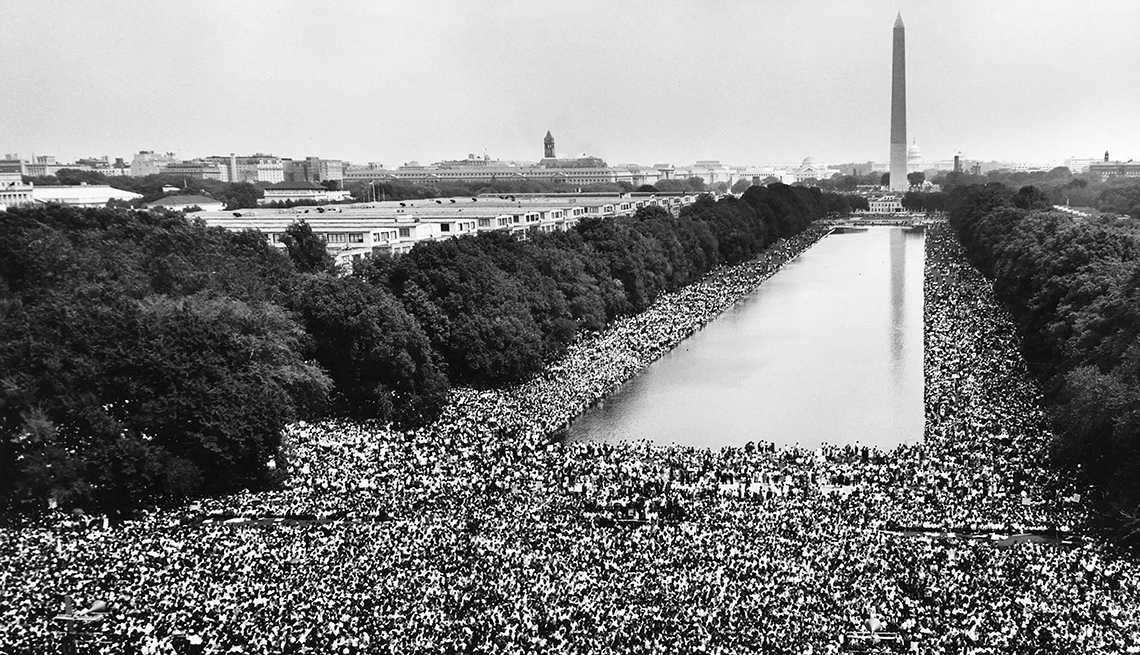
The Shepherd clan is both active and activist. Finishing her lunch of takeout fish puttanesca, newspapers of the day strewn on the table, she talks fast and fervently about her plans to participate in an upcoming march (held April 25) for women's reproductive freedom in Washington, D.C. "All three of my children are going," she says. "And I'm not making them. We hope it's to be the biggest march in history."

She stops and remembers her manners. "Sorry to talk with my mouth full."

Iconic big-screen blonds historically have been expected to self-destruct rather than grow old (Marilyn Monroe) or quietly disappear into private life (Brigitte Bardot). Characteristically, Cybill, who has been both reviled and adored for her brazen outspokenness, not only refuses to fall silent but intends to get louder—incorporating her life's adventures, including all the dustups with colleagues and sexual escapades with the rich and famous, into a stage act. She is constantly tinkering with her one-woman show in cabaret venues around the world—she got great reviews in London's West End last year—with the goal of taking it to Broadway.

"I think of myself as kind of a modern-day Mae West," Shepherd says. "We're two of the few blond, sexy bombshells who have been survivors. Mae West wrote a lot of her own material and she was very funny."

"Cybill is one of those people who will be forever controversial," says her friend, Roger Director, a former writer on Moonlighting, her hit series with Bruce Willis. "Some people will always be fascinated and entertained by Cybill, and others are going to see her as infuriating and impossible. She is daffy and funny and mad and intelligent."


Even when she's sitting and chatting in her kitchen, Shepherd is a one-woman show. She blasts past taboos.

Elvis: "He always had two or three women going at once."

Bill Clinton: "I said [to him], 'You better stay over there, because you have enough trouble.' "

Marriage: "The two times I got married were only because I was pregnant, and I regret both."

Menopause: "I've spoken out strongly on alternatives to hormone replacement."

Her recent bout with a rare form of skin cancer: "It's a terrifying, horrible thing, but you become acutely aware of the blessing of being alive."

'Beauty is a mask I sit behind and watch people react to. It opens or closes doors, brings out love, falsity, and cruelty.'

She's most insightful, however, on the subject of her beauty—how it served her ambitions but ultimately isolated her and stunted her emotional growth. "It's a kind of mask that I sit behind and watch people react to," she says. "Beauty opens or closes doors, brings out love, falsity, and cruelty."

Growing up in Memphis, she was trained by her mother at an early age to suffer in hair curlers and to climb up on her grandfather's lap so that he might buy her a horse. It was her beauty that delivered her to New York City as the Model of the Year in '68 and mesmerized Bogdanovich.

Yet she was also intellectually restless, skeptical of superficial adulation even as she was craving it. She sought out teachers who would inspire her to develop other parts of herself. "I remember [acting teacher] Stella Adler, one of my mentors, once saying to me, 'You're not really beautiful. You have an Irish snout. You just think you're beautiful.' "

Shepherd has never quite lived down the image of home-wrecking strumpet that she earned at 20, when Bogdanovich famously left his wife and two small daughters. The romance lasted for several years, during which Peter and Cybill were viewed as an insufferably smug Hollywood pair, swanning around publicly and flaunting their love.

"People disliked her for being successful and beautiful and not apologizing for it," Bogdanovich says. "She was sexy and striking and smart, and it was a little bit too much for people. A lot of men were threatened."

For her part, says Shepherd, "I felt like an imposter." She kept her mouth shut in the company of their friends Orson Welles, Larry McMurtry, and John Ford, soaking up their stories and reading voraciously the books they recommended. "She'd knock off a couple of fat books a month," Bogdanovich recalls. "She read all seven volumes of Proust—it was amazing." The couple's idyllic bubble burst when he directed her in vehicles that were beyond her abilities—Henry James's Daisy Miller and the musical At Long Last Love. Savaged by the critics, the movies bombed; the couple's detractors exulted and their affair dissolved.

After appearing in a string of forgettable films (The Return, The Lady Vanishes), Shepherd rocketed back in the mid-'80s playing the archetypal ice queen Maddie on Moonlighting. She had always loved the screwball comedies of director Howard Hawks, and her contentious, crackling chemistry with Bruce Willis delighted audiences. Labeled "TV's sexiest spitfire," she won a 1985 Golden Globe for best actress in a television musical/comedy series. But after a couple of seasons, tensions mounted between her and both the show's creator, Glenn Gordon Caron, and Willis, who was ascending to movie stardom with the blockbuster Die Hard.

Her private life offered little support or stability. Shepherd's first marriage in 1978 to David Ford, Clementine's father, was a short-lived stab at normalcy: he was a home-town boy who worked at a Memphis Mercedes dealership. But the couple had little in common besides their child, and they divorced after four years.

During Moonlighting, suffering from back pain and headaches, Shepherd began a romance with the one man who made her feel good: her chiropractor, Bruce Oppenheim. When she became pregnant with twins and married, the show's producers were displeased at the prospect of her juggling nursing with long hours on the set. Feeling ganged up on and exhausted, Shepherd became a terror at work, flying into blind rages that had the tabloids painting her as a dragon lady. Moonlighting and her second marriage crumbled simultaneously.

Shepherd's 40s were a time of self-examination. "I went into psychotherapy very seriously," she says. It was there that she realized for the first time how bad she felt about years of lying and cheating and selfishness, and the pain she had caused. Eventually, her anger subsided. "Yeah, I had a rage problem. I didn't know how to deal with the situation on Moonlighting. I threw a chair at the wall. I was accused of throwing it at Glenn Gordon Caron." Her lips turn up mischievously, as if she wishes she had.

Most important, she says, dealing with her own issues helped her learn how not to pass them along to her kids. "I became a better mom," she says.

After Moonlighting, she would never again trot out her glamour-girl persona without commenting on its fraudulence. So when CBS offered to build an eponymous show around her personality and her life, she jumped. Cybill Sheridan was a twice-divorced actress in her 40s with a hilarious, hard-drinking best friend (Christine Baranski), two ex-husbands, various boyfriends, and other real midlife challenges.

Cybill was hugely popular with women and was awarded a Golden Globe in '96. Yet the show was canceled after four-and-a-half seasons—partly because Shepherd, as producer and star, clashed with the network by pushing for frank content about women's sexuality. Shepherd was devastated. But the show's run and its aftermath exposed her to something different from the envy and resentment she had provoked when she was young: her fans responded to the honesty and humor she brought to real-life issues ranging from menopause to alcoholism. "Young women, old women still follow me into bathrooms and thank me for it."

Her most recent role, playing Martha Stewart in last year's television biopic Martha, Inc., was slightly more complicated. It was a part she lobbied for—she calls it "a role of a lifetime"—because she could relate to Stewart's relentless drive, her rages, and her reputation. But there were differences, too: "We're both considered very strong, and people think I'm like Martha. They think I'm really mean, that I treat people terribly, but I don't. I'm not hard. There's a great difference between being strong and being hard."

One passion the two women share: food. Shepherd talks of her mother's fried quail and turnip greens with a gusto not dissimilar to the tone she uses when discussing sex. As an actress, she starved herself in pursuit of an impossibly skinny ideal. She had just lost 30 pounds when she was offered the role of Martha, but happily gained back 10 to play the part. Then she kept on going to regain the whole 30.

"I got the curse of Martha!" she says, chortling. But she learned a valuable lesson and decided to liberate herself from the tyranny of diets.

"This is important for women, I think. I am never going to lose that 30 pounds again. I changed my goal to be about 15 pounds heavier than I used to be, and that's fine with me. I've made peace with it." She adds, "I'm ready for my Shelley Winters parts now."

For the moment, Shepherd is likewise bucking the cosmetic surgery trend among actresses over 35 and has reconciled herself to looking older than her peers. Her aversion to cosmetic surgery is also influenced by having endured several major surgeries—including one for a rare form of skin cancer two-and-a-half years ago. Dermatofibrosarcoma protuberans occurs in less than five people per million. "It has nothing to do with the sun," she says—and she'll need follow-up examinations for the rest of her life.

She does have one funny plastic surgery story: "I got offered a lot of money to do a commercial for a yogurt company," she says. "And the copy I was supposed to read said, 'Well, okay, so I've had a few nips and tucks here and there.' I told them that I really wanted to do it, but I said, 'Can you write something different for me, because I haven't had any nips and tucks?' And they turned me down!" She laughs uproariously. "They were more in love with their copy about nips and tucks than they were with me!"

Shepherd sits cross-legged in a lounge chair in her living room, treating me to a dramatic reading from Cybill Disobedience. "Then he opened his jacket and revealed a pearl handle revolver.…" She curls her upper lip and drops her voice down into the silky Southern tones of…The King. " 'I carry this little girl everywhere I go,' he said." She nails Elvis. "I should have read this for Books on Tape!" she jokes. Her book vividly depicts her encounters with him, especially a weekend during the Bogdanovich days when Elvis's bubbas sneaked her away to the singer's hotel in Vegas. ("She actually had a couple of affairs I didn't know about until I read the book," Bogdanovich says.) Among the few details printable in a family magazine is that Elvis served her deep-fried peanut butter, banana, and mayonnaise sandwiches.

These days, it's Shepherd who is serving up the sandwiches—to her kids. In the past five years, she has turned down offers to appear on Broadway because she wanted to stay home with her teenagers. She is financially secure, having taken to heart her role model Katharine Hepburn's prescription for happiness: "You just need enough money to say no." But in the next year when Zack and Ariel graduate from high school and her nest empties, she plans to travel, taking her cabaret act with her.

She welcomes offers for interesting TV guest spots or supporting parts in movies but says she is just as happy to be supporting her daughter Clementine, who has a starring role in the indie film Last Goodbye. "She's brilliant in it. I'm very proud of her."

Today, Shepherd is savoring the most serene period of her adult life: she meditates, does yoga, and stays home to read spiritual tomes such as Full Catastrophe Living by Jon Kabat-Zinn. Her friends say she hasn't lost her tremendous sense of fun, however. On a night out, she will be the first one to suggest heading to a club—and end up dancing with a stranger.

She dates, but swears that her wild, promiscuous days are behind her. "I am finally the woman my mother always wanted me to be," she says. "I find myself pleased with myself and with my solitude. I would love to have a life partner who was a great conversationalist and is funny, and thought I was funny. Honesty and a sense of confidence are important. Not the money so much."

Indeed. When she is told that Diane Keaton says she doesn't date because she doesn't meet suitable men, Shepherd exclaims, "She's right! It's impossible! More and more people are Internet dating. It's acceptable, except for Diane and me." She wraps her arms around her knees. "Poor little Diane and me," she says, throwing her head back for a final laugh. Pause. "You know, I really wanted that part she had in Something's Gotta Give." She leans forward, toward the tape recorder. "I just want you to know that, Diane."

Veteran Hollywood writer Nancy Griffin is West Coast editor for the magazine.

Now, take our web-exclusive quiz to learn more about Cybill.